 Inline measurement Marrari
In-line Grain Moisture Meter – UmiGrain
- < 2 ppaccuracy on grain
- 5/sreadings in the flow, no sampling
7–30% wet-basis range
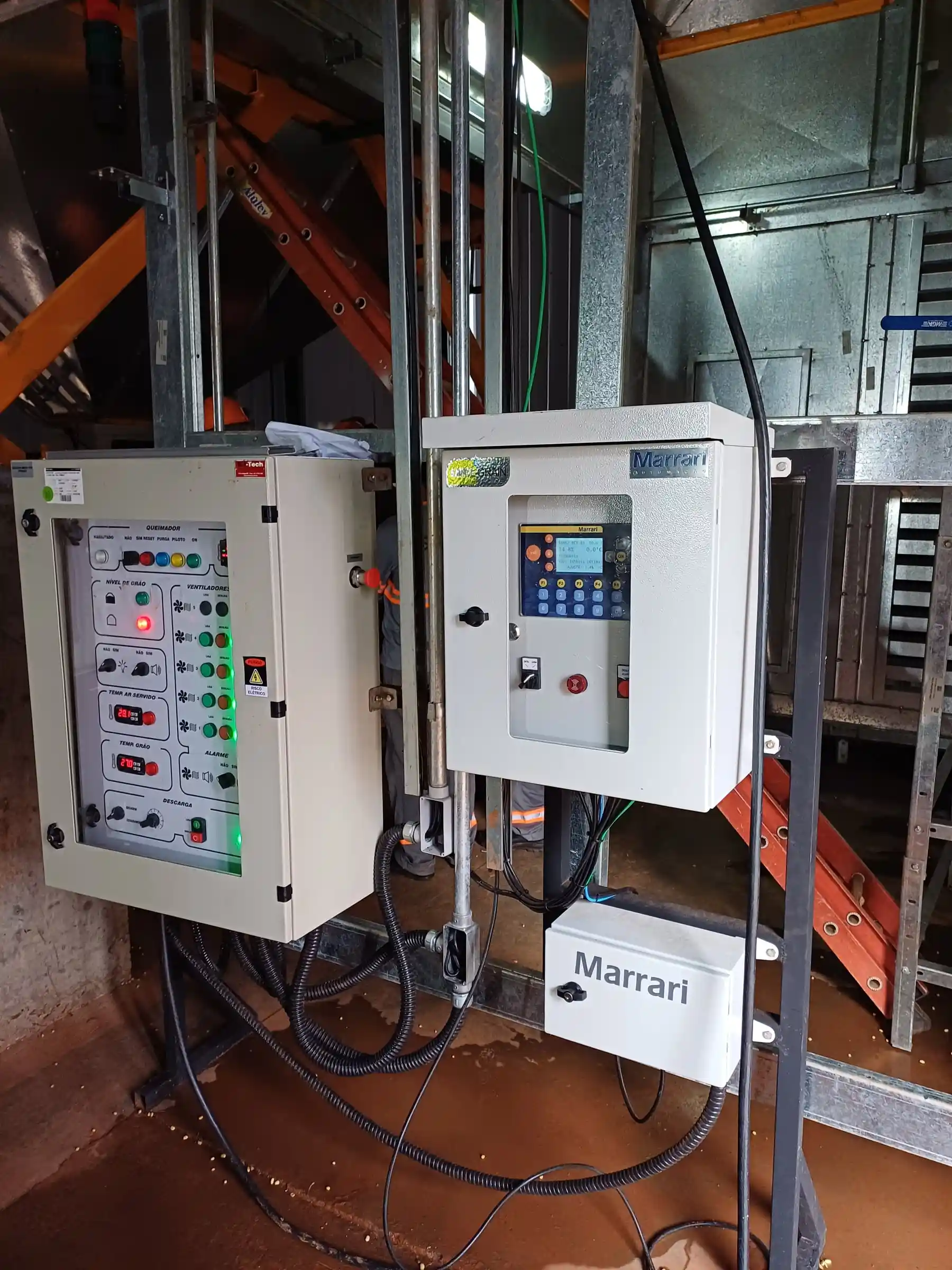
What is the UmiGrain in-line grain moisture meter?
UmiGrain is an
4–20 mA and Modbus RTU/TCP outputs- Reads
100 mm deep
- ForDryers, storage facilities and the grain and seed industry
- GrainsSoybeans, corn, wheat, rice, beans, coffee and oats
- CalibrationA recipe for each grain, adjusted with laboratory samples
- Data loggingMoisture of every batch stored to trace the drying
Why measure grain moisture in-line, at the dryer?
With manual sampling, the dryer runs blind between one sample and the next.
- Less
over-drying , which takes weight off the grain and causes cracks. - Less wet grain in the silo, where it favors fungi, bacteria and fermentation.
- Fewer discounts at sale:
off-standard moisture lowers the value of the grain.
360times more mass analyzed per hour
Conventional process × UmiGrain, according to Marrari.
Where should the grain moisture meter be installed?
Five points in the flow, from grain reception to final shipment. Our team indicates the most effective point for your process. There are 3 sensor models: rotary sampler, column sensor and pendulum sensor.
Conveyors and belt systems · Sorting and grading ·
- Conveyors and belt systems
real-time corrections during transport. - Sorting and gradinggrain separation by moisture content, within quality standards.
Pre-cleaning removal of moist impurities and fragments before the next stages.- Milling and grindingless adhesion in the systems and more uniform flours.
- Animal feedright moisture in the formulation grains, for nutritional value and stability.
Grain-based foodsstable final quality, withoutmoisture-related microbial issues.- Packaging and baggingautomatic adjustment of packing and weight to the measured moisture.
Where does each sensor go in your plant?
Choose a sensor to see where it can be installed.
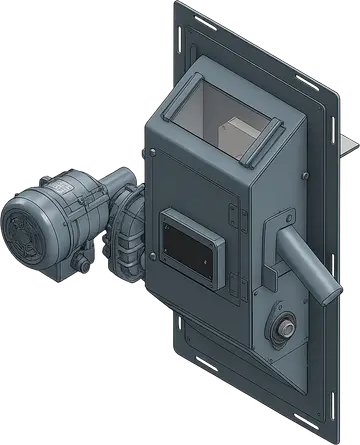
Rotary sampler
Gathers the sample from the flow and brings it to the sensor, even with little product.
- Dryer inlet and outlet
Pre-cleaner outlet- Elevator inlet
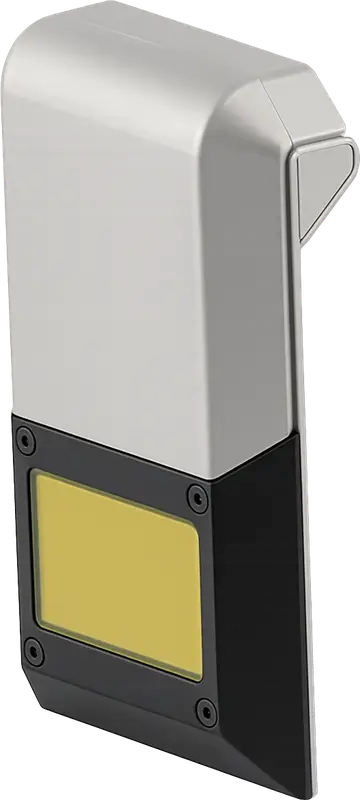
Column sensor
Sits on the dryer wall, inside the grain column, and reads moisture before the grain leaves.
- Up to 4 points on the dryer wall
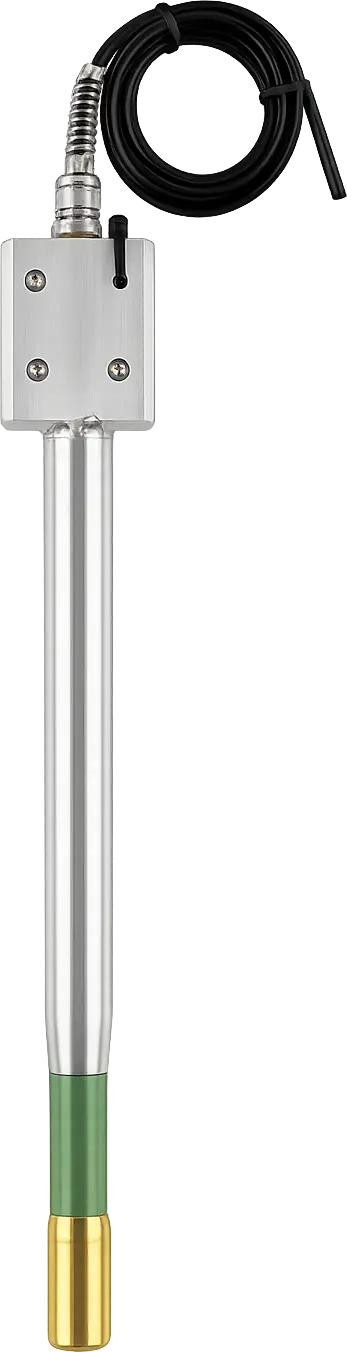
Pendulum sensor
Goes inside the silo or static dryer, with the tip in the grain mass, to follow the moisture in there.
- Inside the silo
- Static dryers
How does the UmiGrain grain moisture meter work?
The grain passes through an electric field generated by the sensor (capacitive method). Moisture inside and on the surface of the grain changes that field, and the processor converts the change into percent moisture.

- Grain flows past
The flow covers the sensor. With low flow, the rotary sampler gathers the sample.
- The sensor reads
Continuous reading, with automatic temperature compensation.
- Data goes to the process
From the Marrari PLC to the dryer PLC or the system that controls it.
- The lab confirms
Samples adjust each grain’s recipe in the Tracker software.
Grain moisture: what does the UmiGrain software show?
On the UmiGrain supervisory screen, moisture from each sensor appears in real time, by batch, with reports by period. In Tracker, recipes are adjusted with laboratory samples.
To bring this meter and other plant equipment onto one screen, use the PSi4 supervisory system.
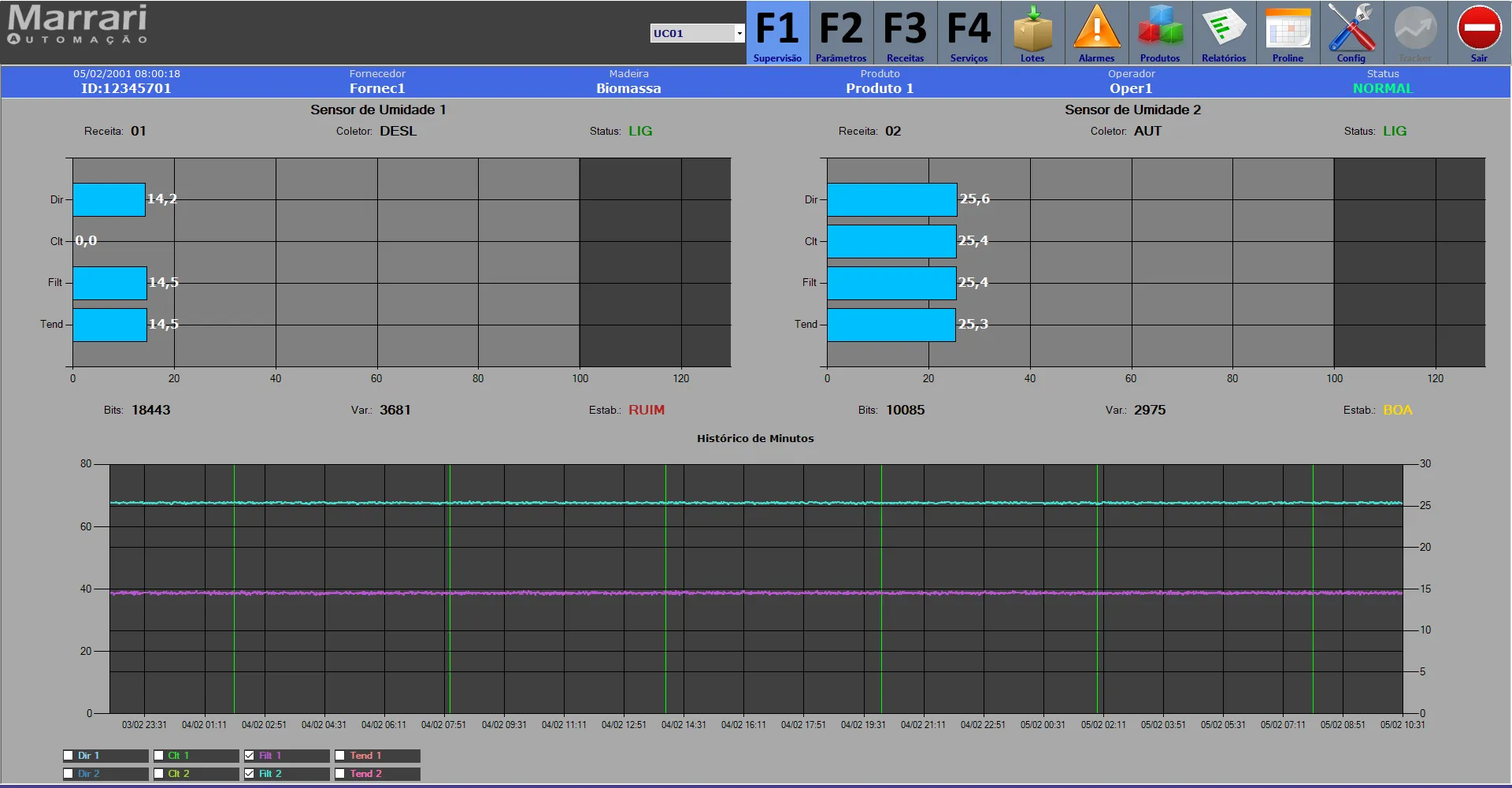
How to read this screen
- The bars show the moisture read by each sensor.
- The blue bar identifies the batch: supplier, material, product and operator.
- The lower chart keeps the reading history, minute by minute.
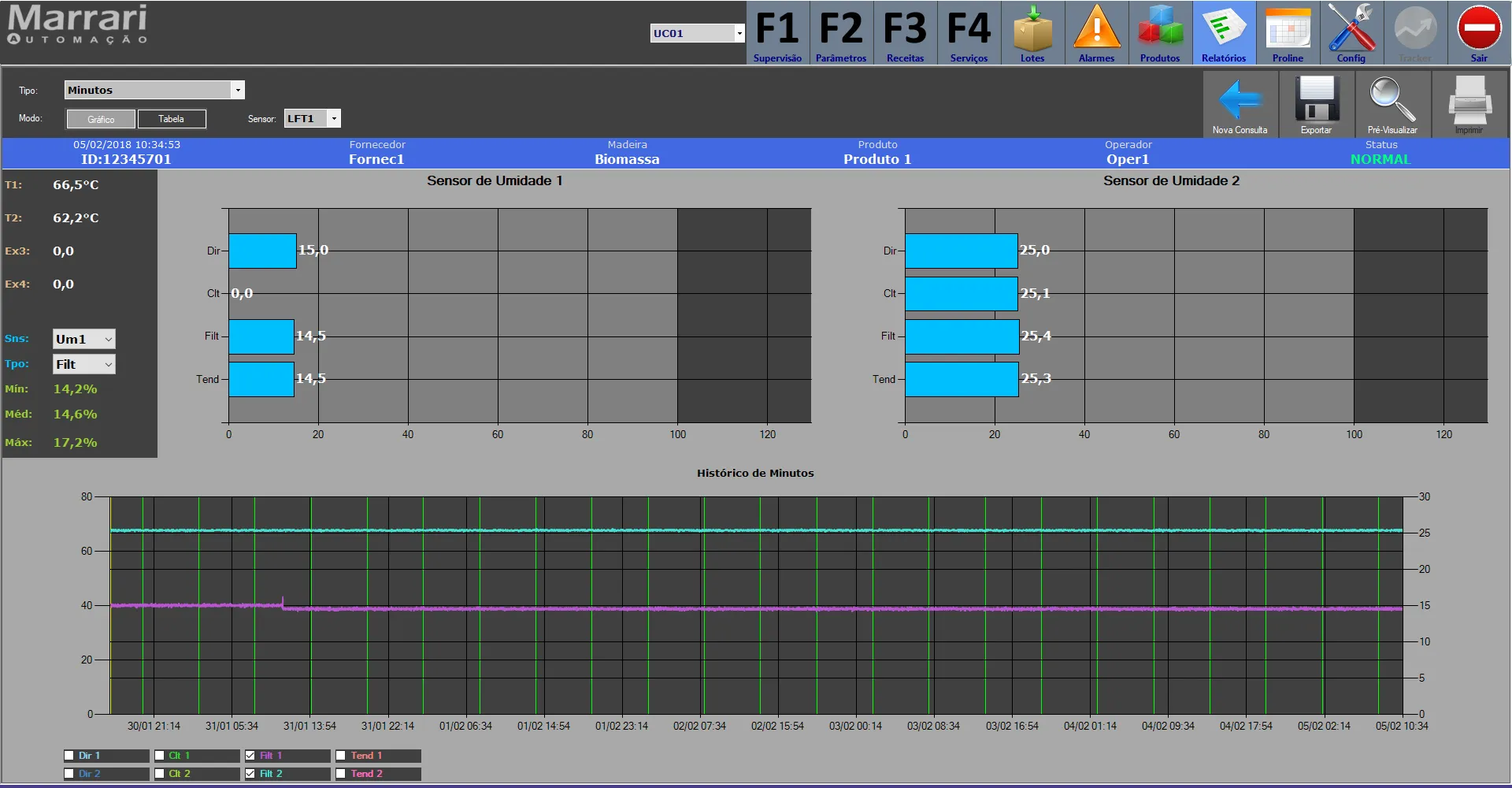
How to read this screen
- You pick the query type and the sensor, and view it as a chart or a table.
- On the left, the period’s minimum, average and maximum moisture.
- The chart shows how moisture varied over the days.
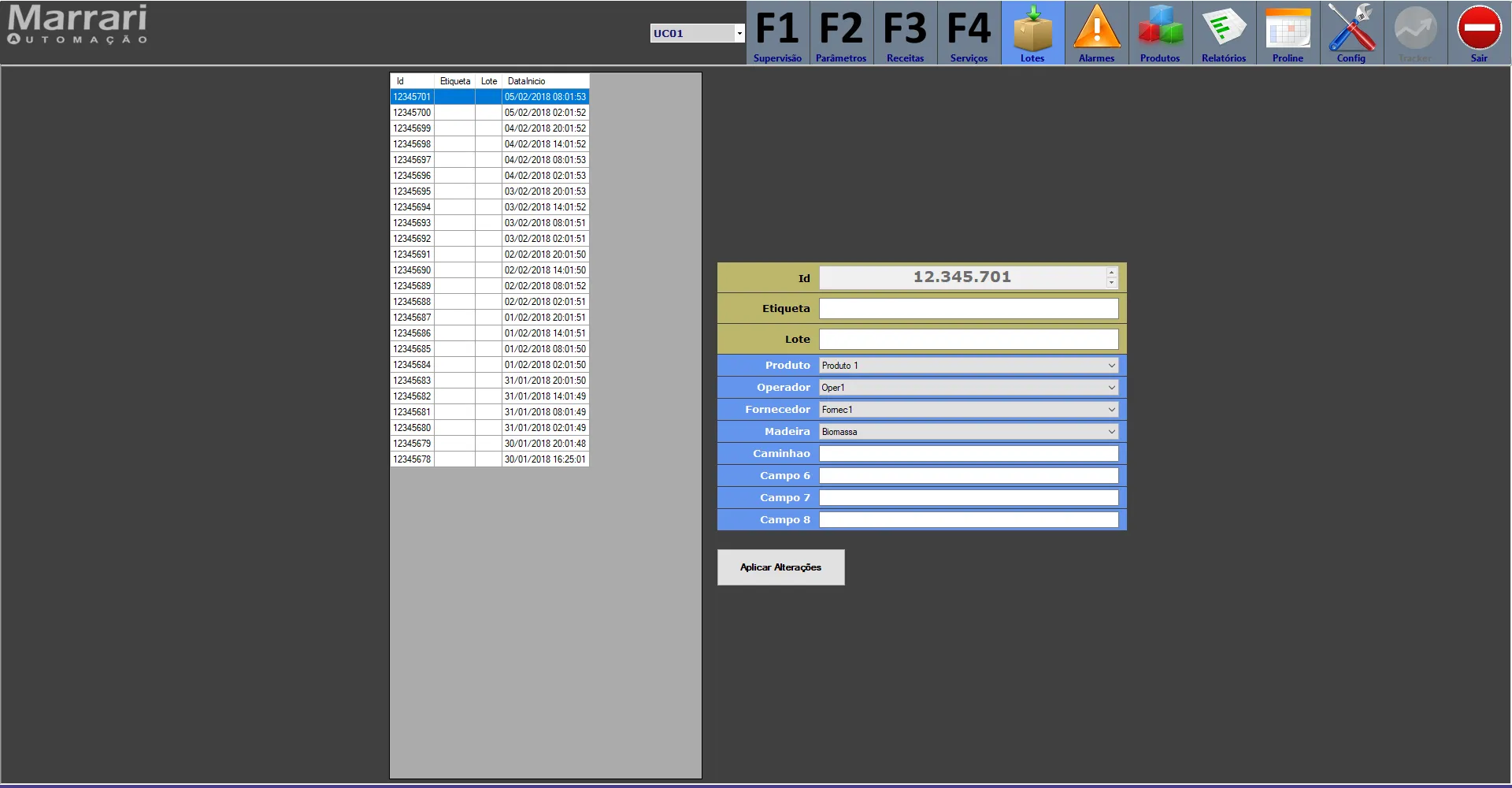
How to read this screen
- On the left, the batch list, with date and time.
- On the right, the batch’s identification data.
- With the batch open, the readings stay separate in the report.
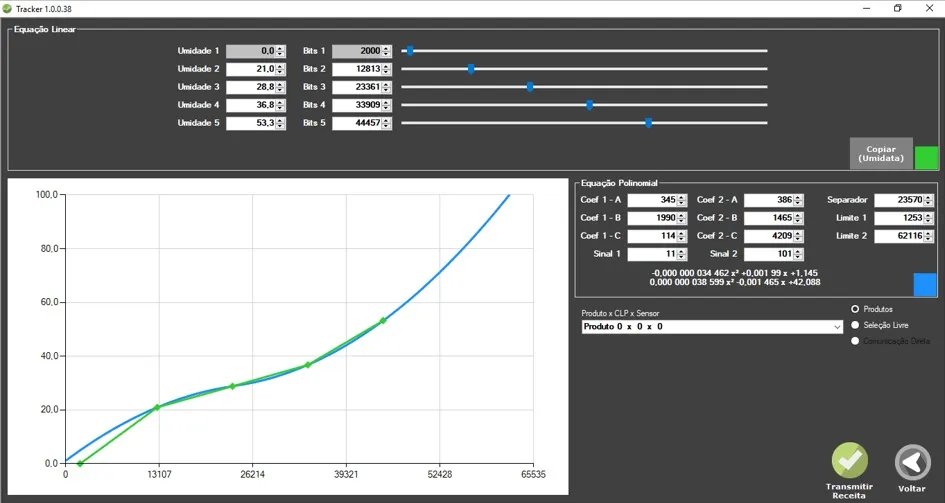
How to read this screen
- Tracker adjusts each material’s recipe with laboratory samples.
- The chart shows the calibration curve.
- At the top and on the right, the recipe points and equations.
Who uses UmiGrain
In the process flow, UmiGrain measures the moisture of soybeans, corn, wheat and seeds without sampling.
In operation at dryers and storage facilities of agribusiness companies in Brazil and Latin America. Companies using the UmiGrain: Bunge, Cargill, Copasul, Agro Fortaleza and Pirahy Alimentos.
The case published on the blog shows UmiGrain measuring moisture in real time at a grain facility in Mato Grosso do Sul, Brazil.
7–30% wet-basis range- Less energyused in the dryer, without overdrying
- 5/scontinuous readings in the flow
- < 2 p.p.moisture accuracy
Companies using UmiGrain


How much do you lose by drying grain past the target?
Drying 1 point more than needed takes weight off the grain you sell: in a
Want to cut this loss? Request a quote
Calculator unlocked. Enter your process numbers.
The fields start with the page example
—
How the calculation works
Grain dry matter does not change during drying; only water leaves. So: loss (t/h) = flow × (Mtarget − Mactual) ÷ (100 − Mactual), with moisture in % wet basis and the grain flow at the dryer outlet. This is the classic water shrink formula used in grain drying tables. Example: bags = tonnes × 1,000 ÷ 60; the value is bags × price per bag.
This only estimates the extra water removed. It does not include dry matter handling loss, extra dryer energy or commercial discounts, which vary by contract, so the real loss tends to be higher.
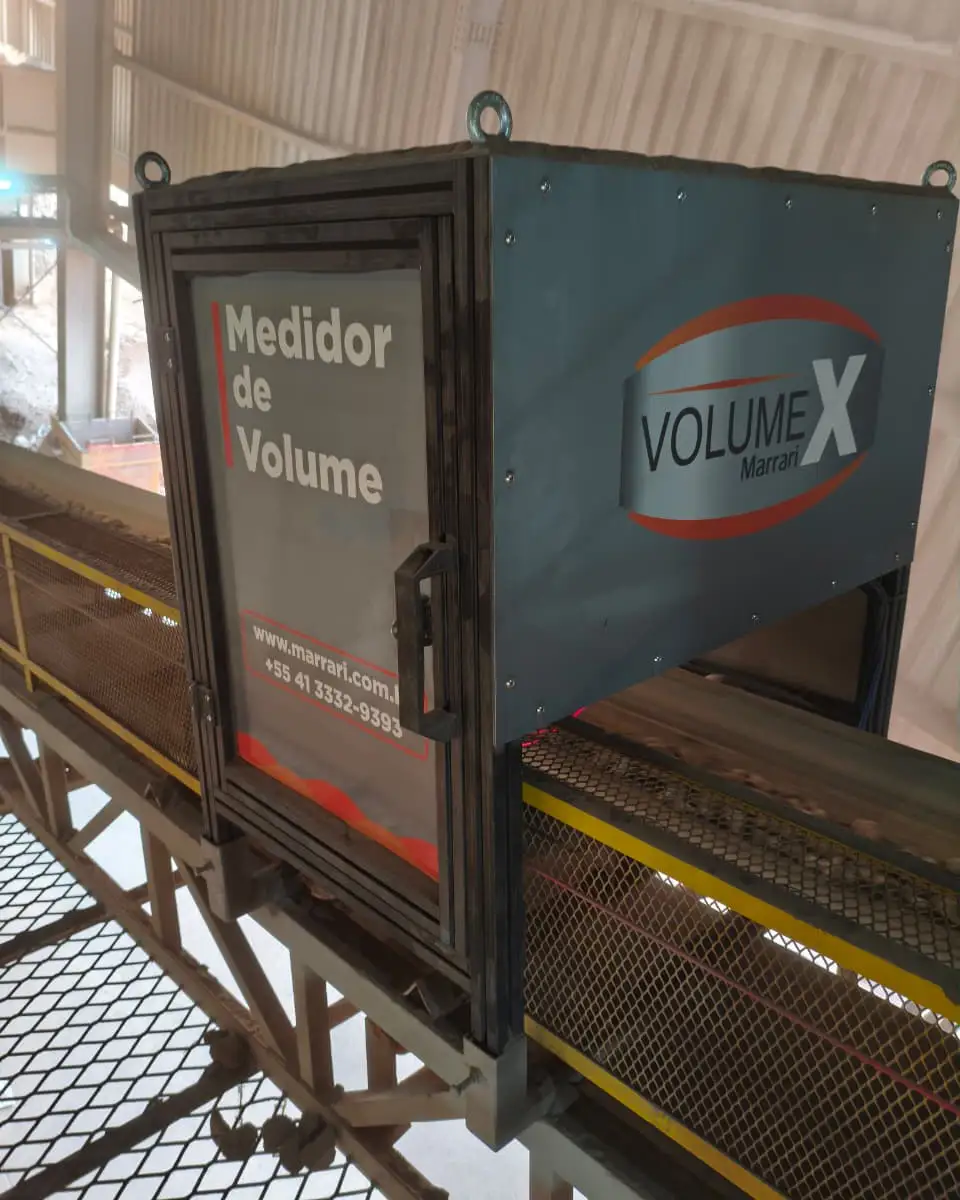
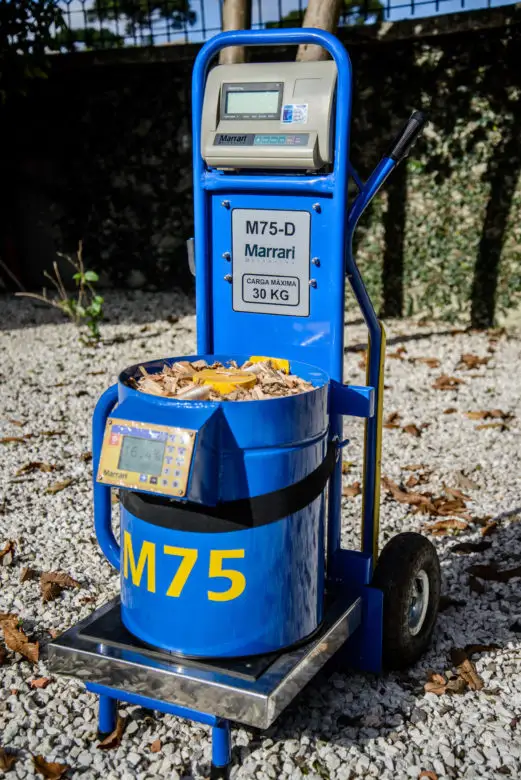
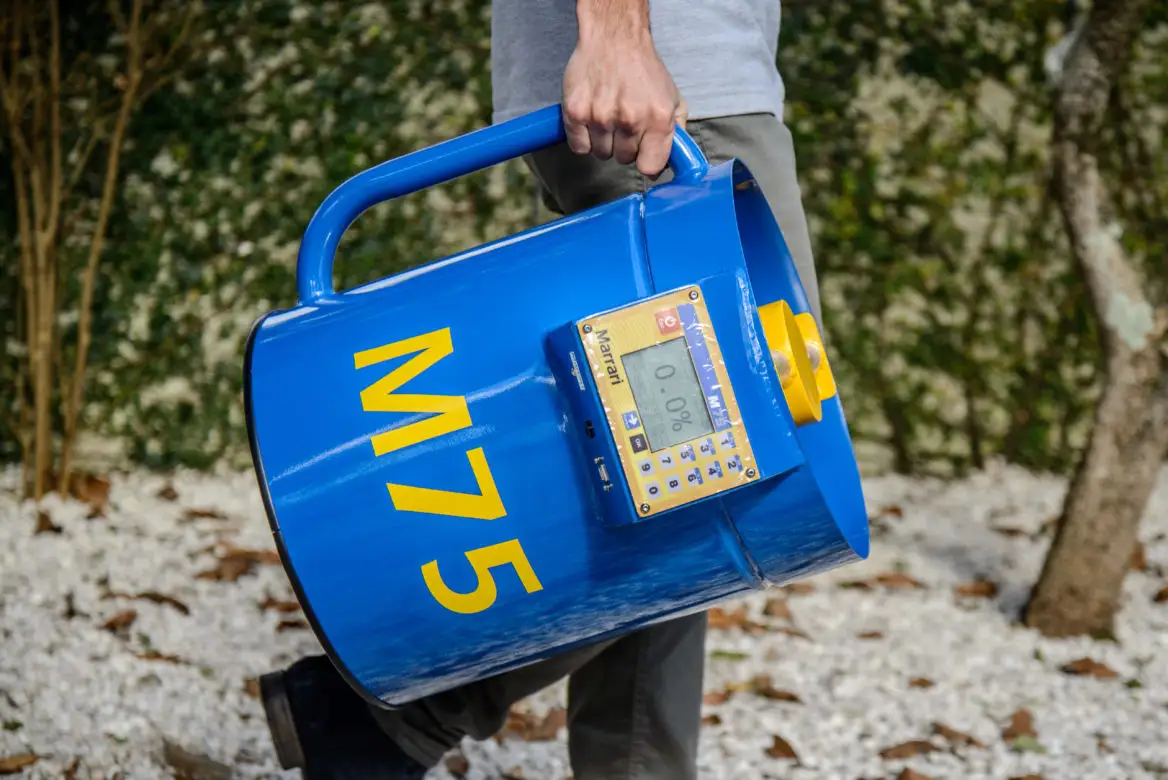
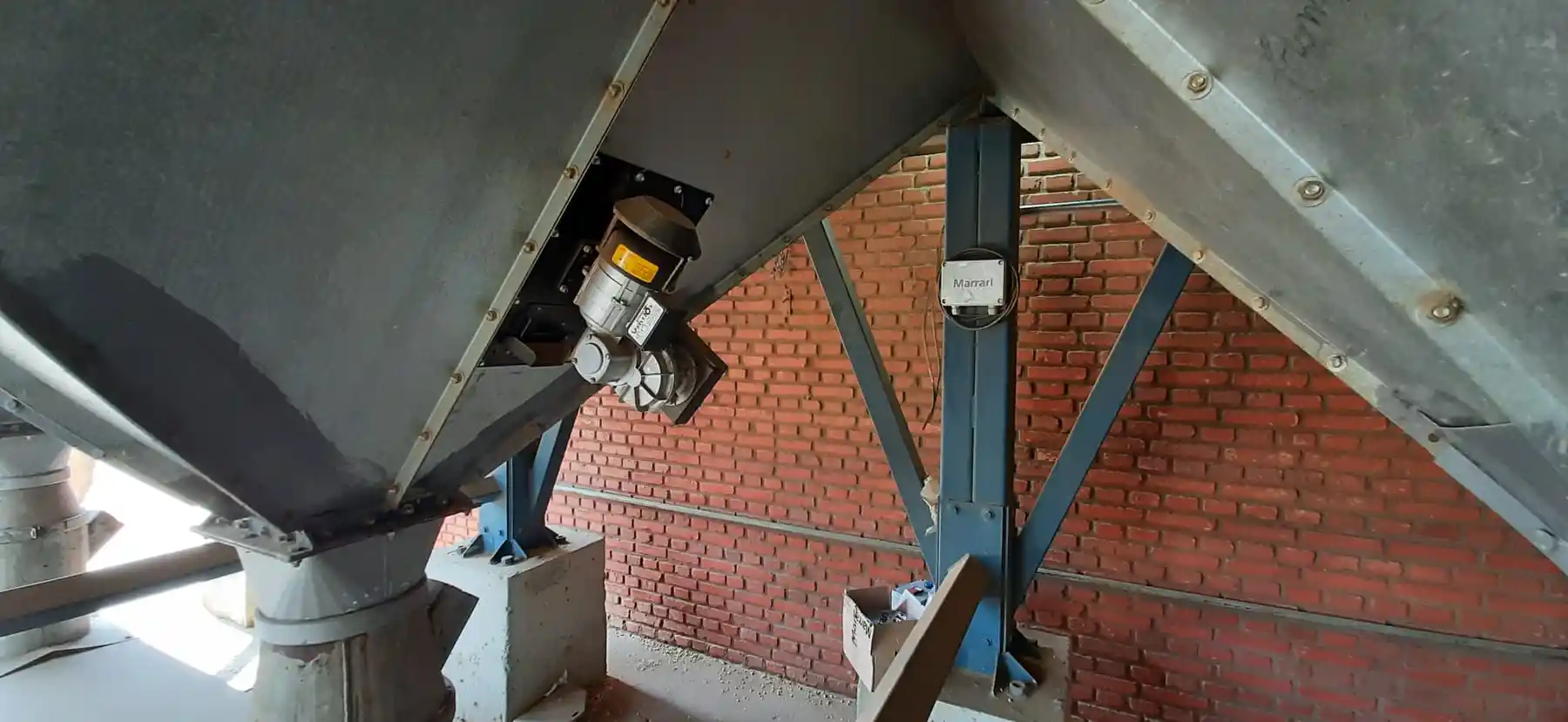
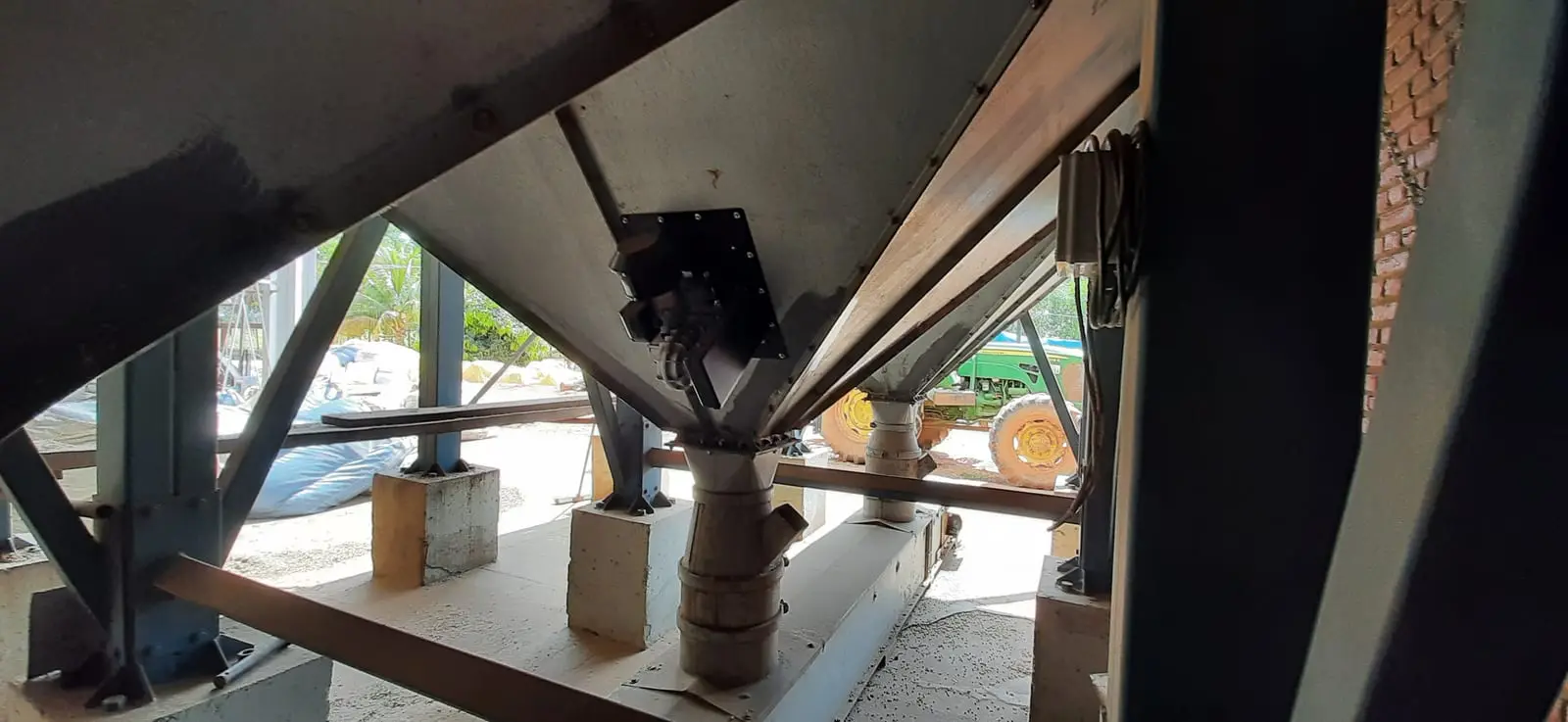
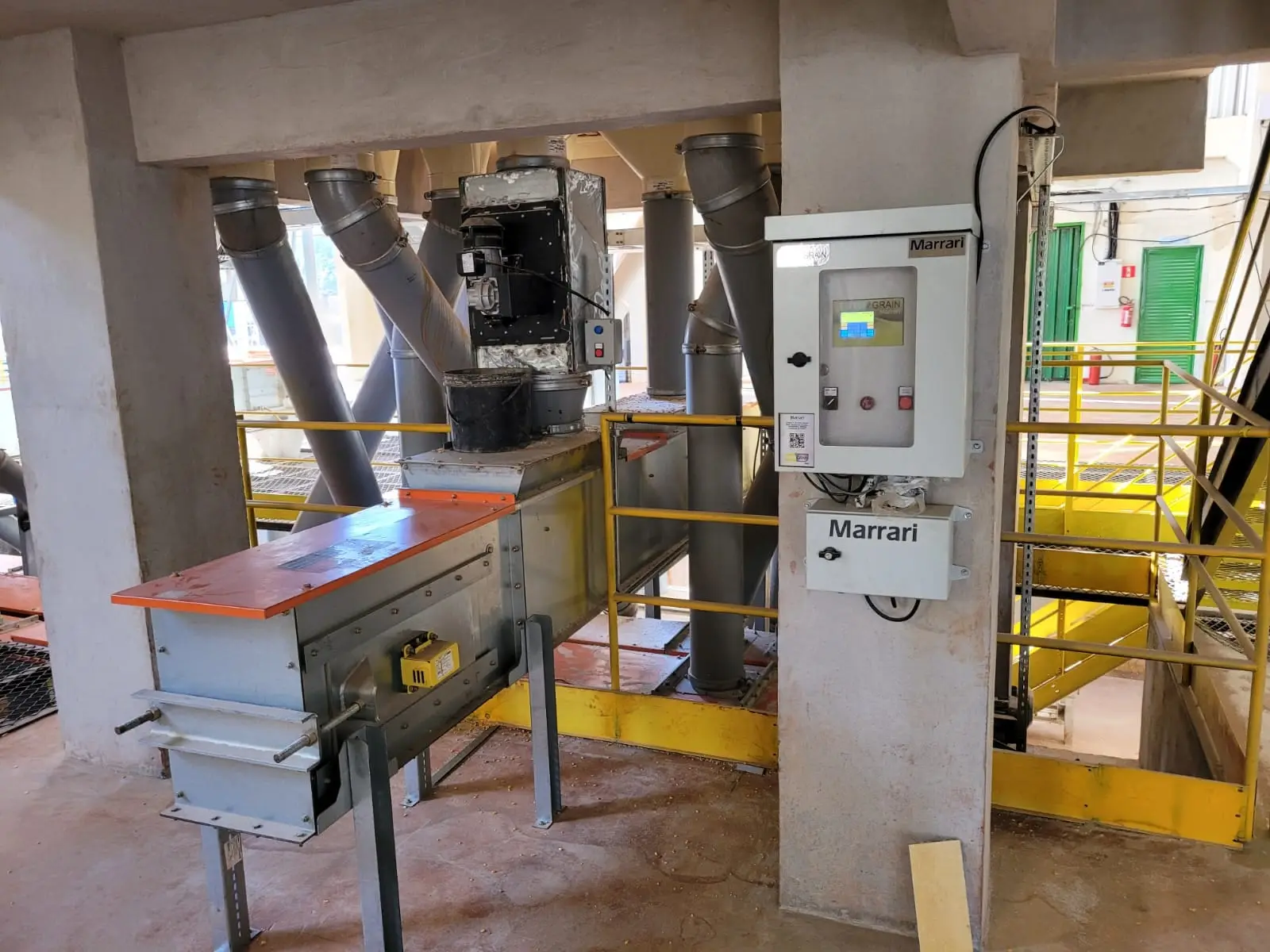
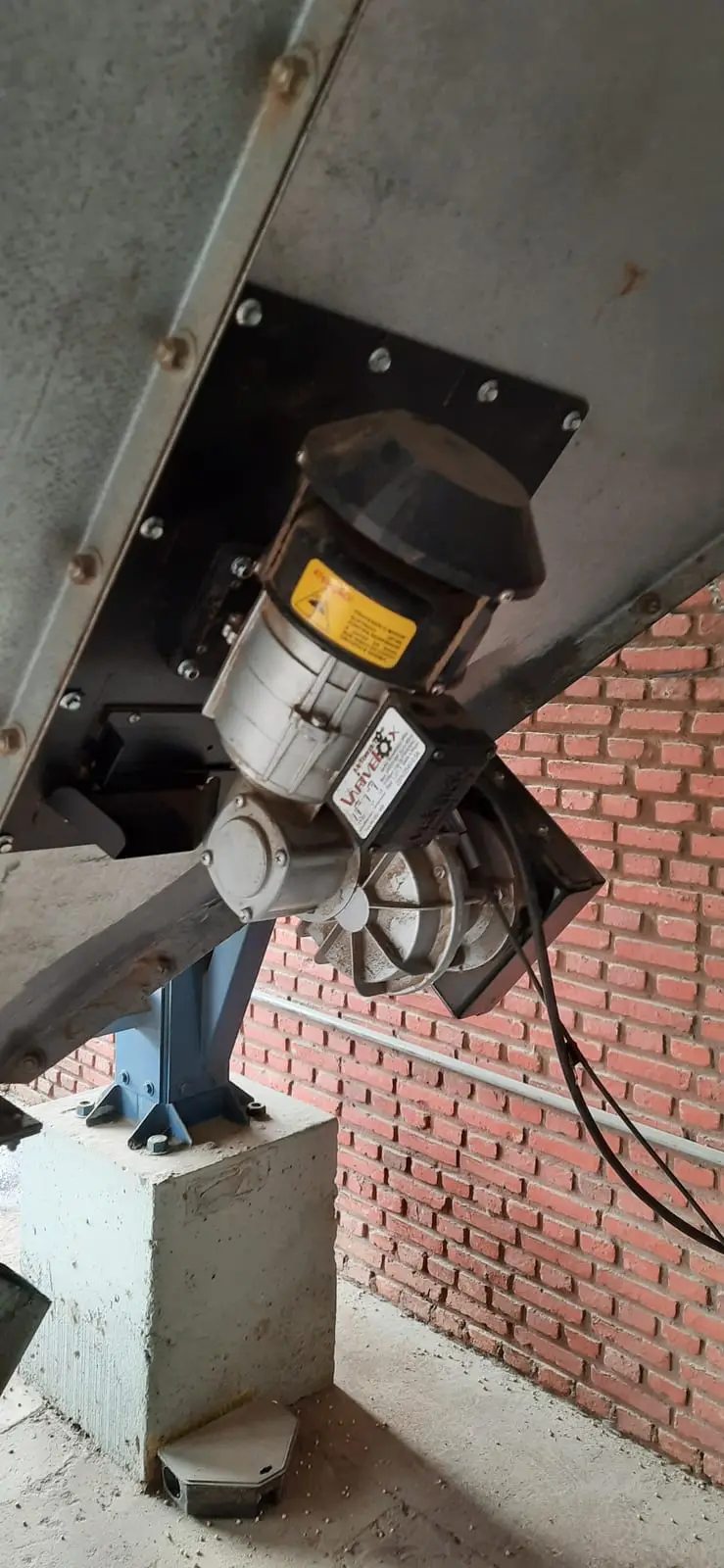
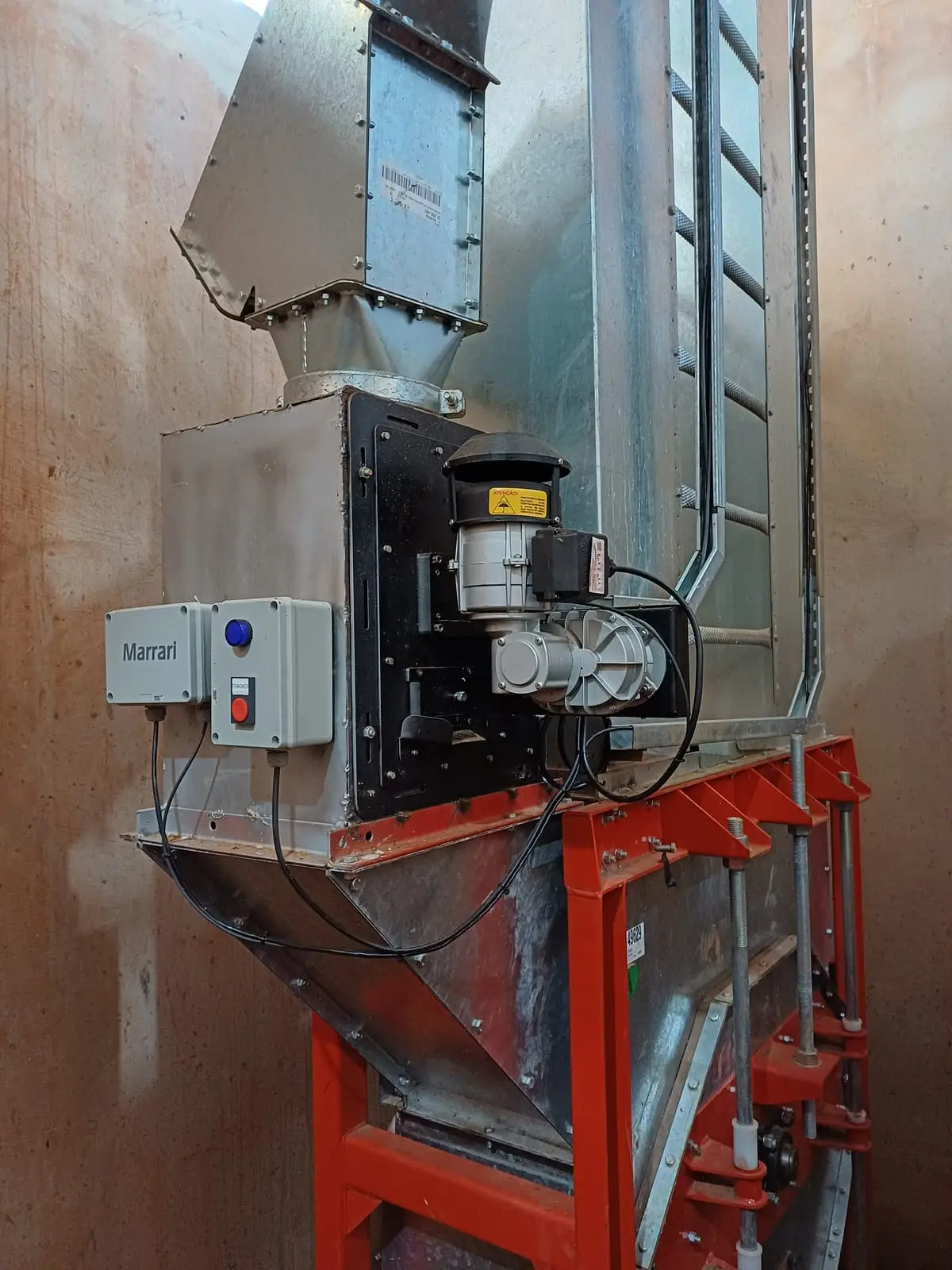
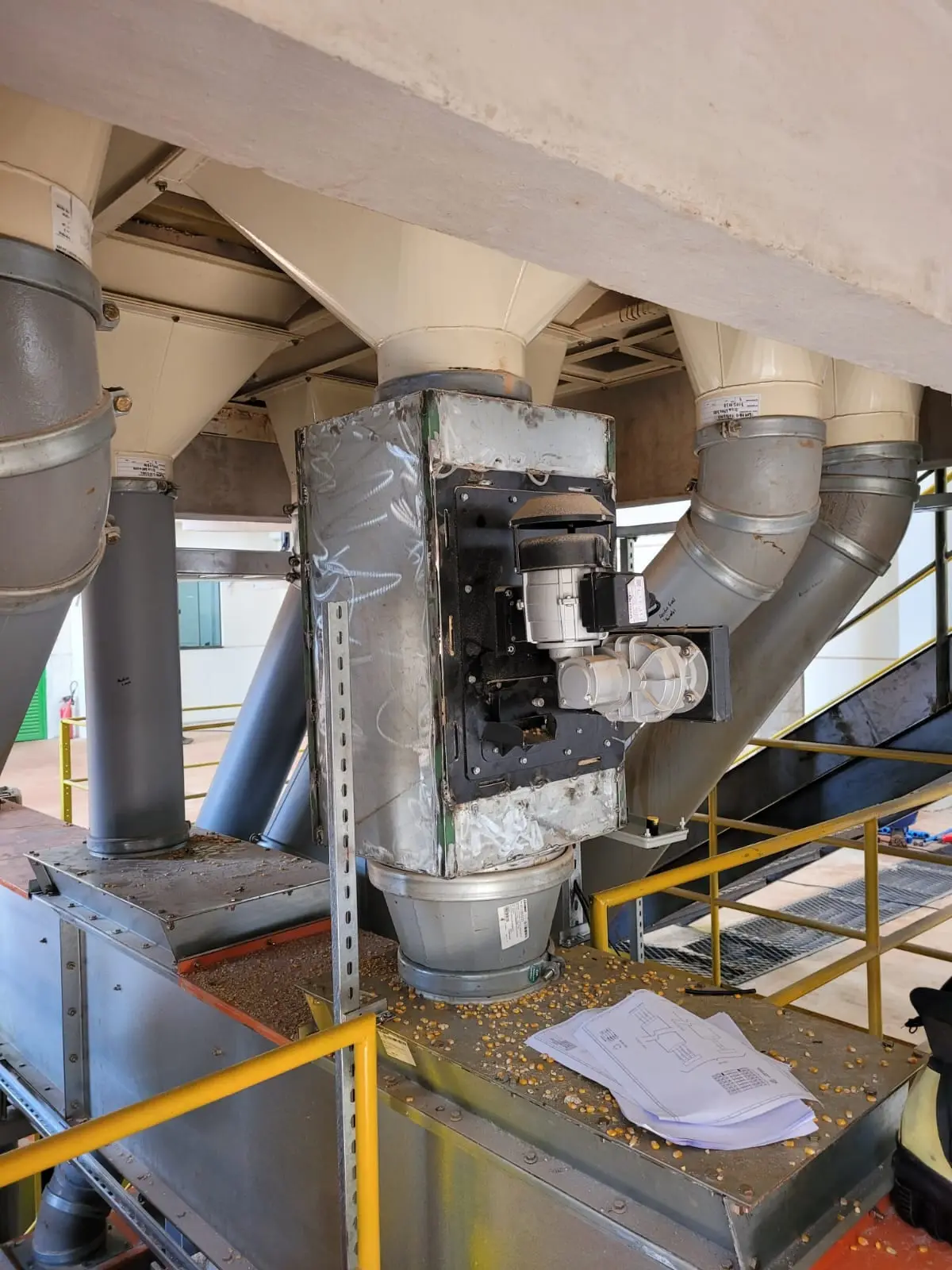
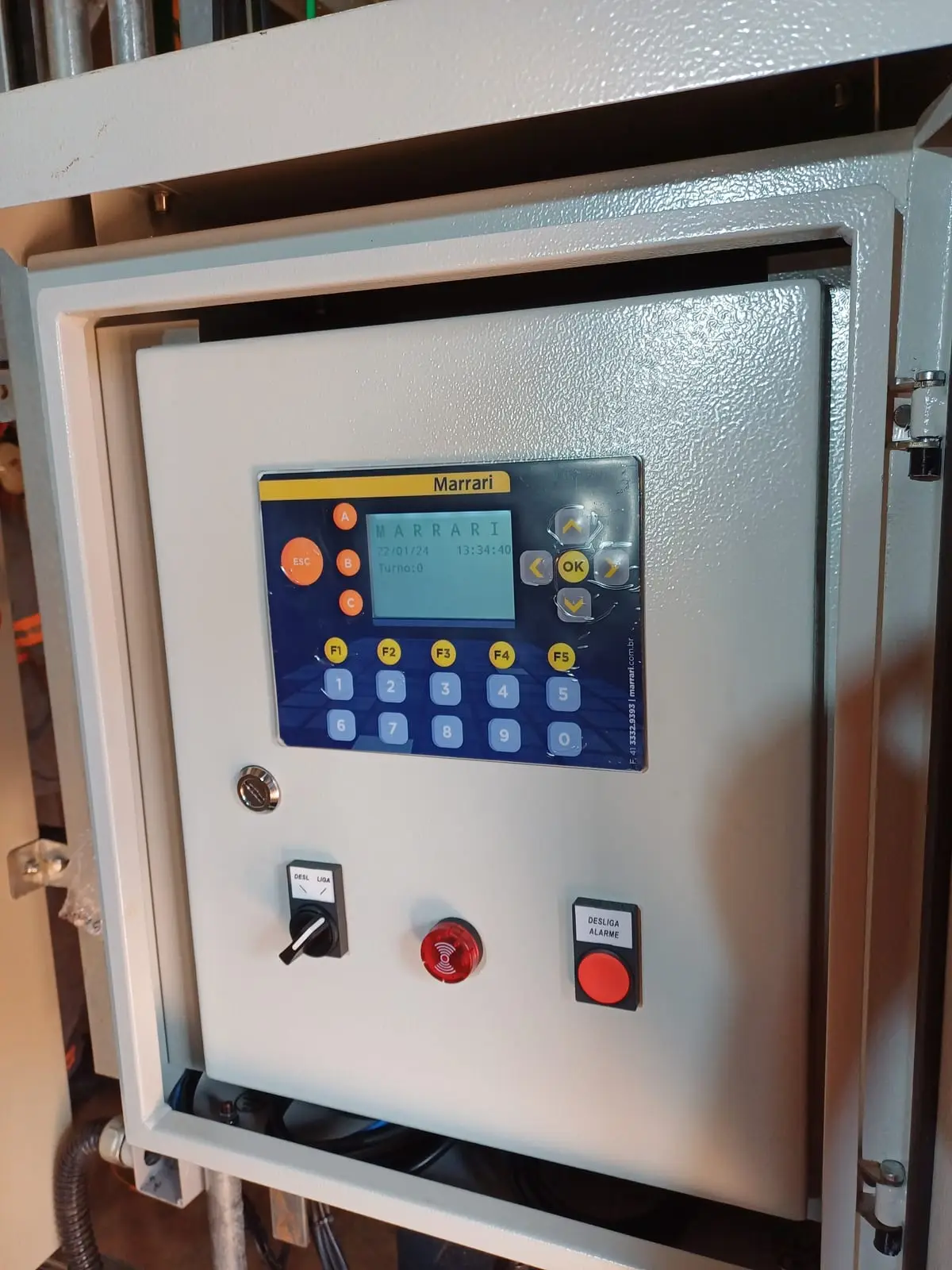
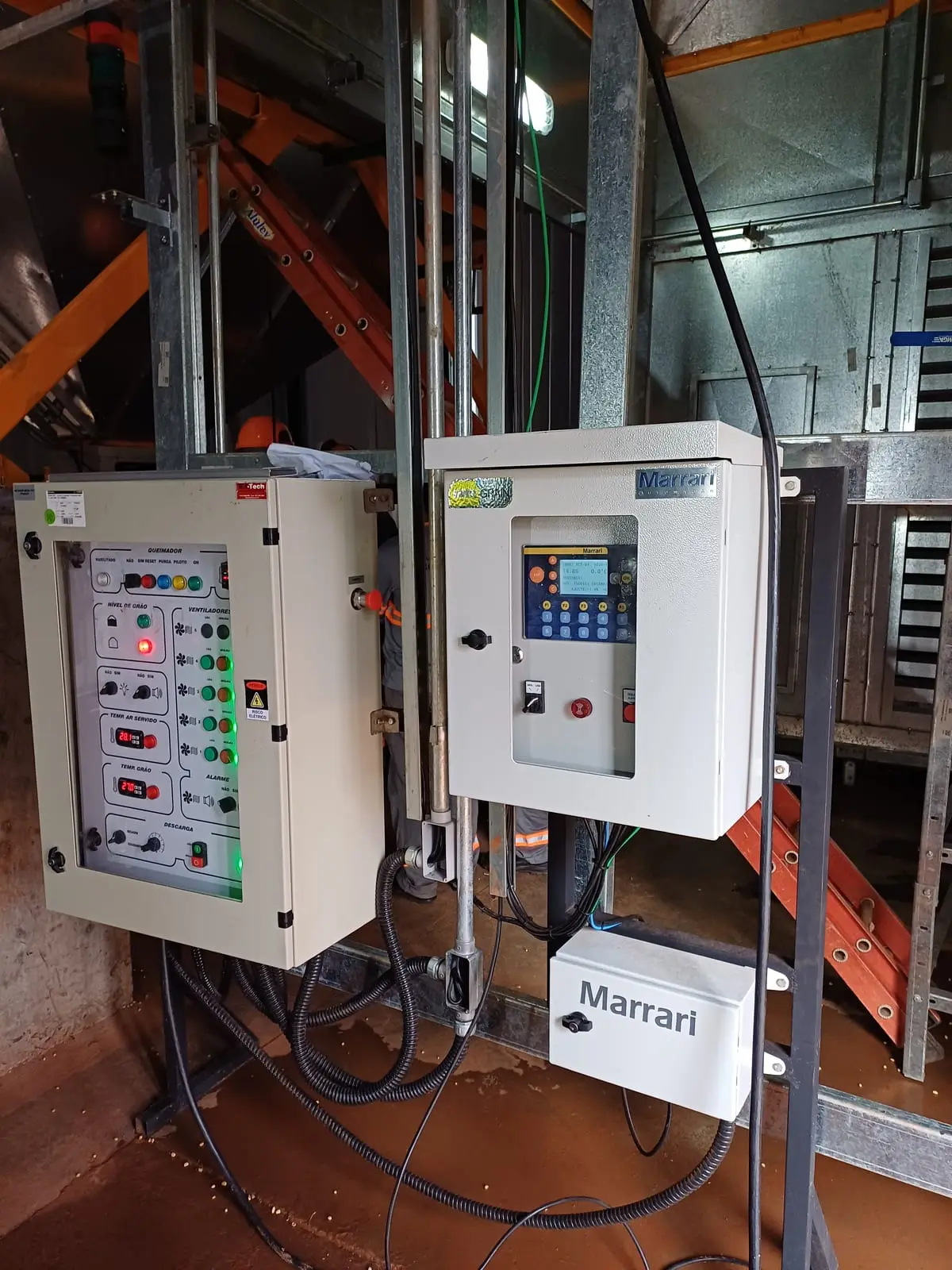
UmiGrain photos
Real photos of the equipment and installations. Click or tap a photo to enlarge it.
UmiGrain technical specifications
Measurement
| Measuring principle | dielectric, 5 readings per second; rotary sampler keeps the sample uniform |
|---|---|
| Measuring range | 7 |
| Accuracy | better than 2 percentage points of moisture |
| Sensor reach | up to |
| Grains | beans, rice, coffee, corn, soybeans, oats, wheat, sorghum, barley, peanuts and others; up to 100 recipes (one per grain type) |
| Calibration | recipes adjusted with laboratory samples using the Tracker software |
| Standards and reference method | Brazilian standard NBR 14929 or a reference moisture meter |
Installation and integration
| Outputs and communication | 4 x |
|---|---|
| Data logging | last hour of readings in the unit and history in the supervisory software |
| Power supply | 95 |
| Protection | IP54 central unit (500 x 400 x |
| Operating temperature | up to |
Frequently asked questions about the grain moisture meter
In which parts of the process can I install the equipment?
Does the material need to touch the sensor?
What is the difference between a portable and an in-line grain moisture meter?
Which grains and cereals does UmiGrain measure?
How do I test grain moisture in-line?
Is the grain moisture meter pre-calibrated?
Why measure grain moisture right after harvest?
What is the UmiGrain warranty?
How does buying from outside Brazil work?
No question with that term. Try another word or talk to the team on WhatsApp.
Request a quote: UmiGrain
Free and with no obligation. A Marrari specialist replies within 24 business hours.
- Installation and integrationWe indicate the point in the flow and connect UmiGrain to the Marrari PLC, which passes the reading to the dryer.
6-month warrantyFor all Marrari systems and equipment.- Support and calibrationSupport in Brazil and Latin America; new recipes from the UmiLab laboratory.