Biomass and Granulates Moisture Meter – M75
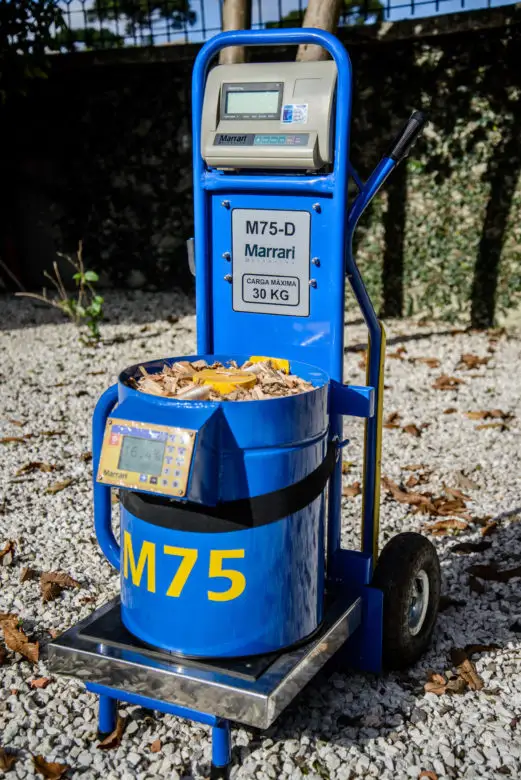
Portable moisture meter for biomass, wood chips, sawdust, bagasse, crop residues and other organic granulates. It measures moisture and estimates the net calorific value (NCV) instantly, in the yard.
- NCVnet calorific value with the moisture
- ±2 p.p.accuracy on process chips (biomass: ±3)
35 L sample, not compacted
What is the M75 biomass and granulates moisture meter?
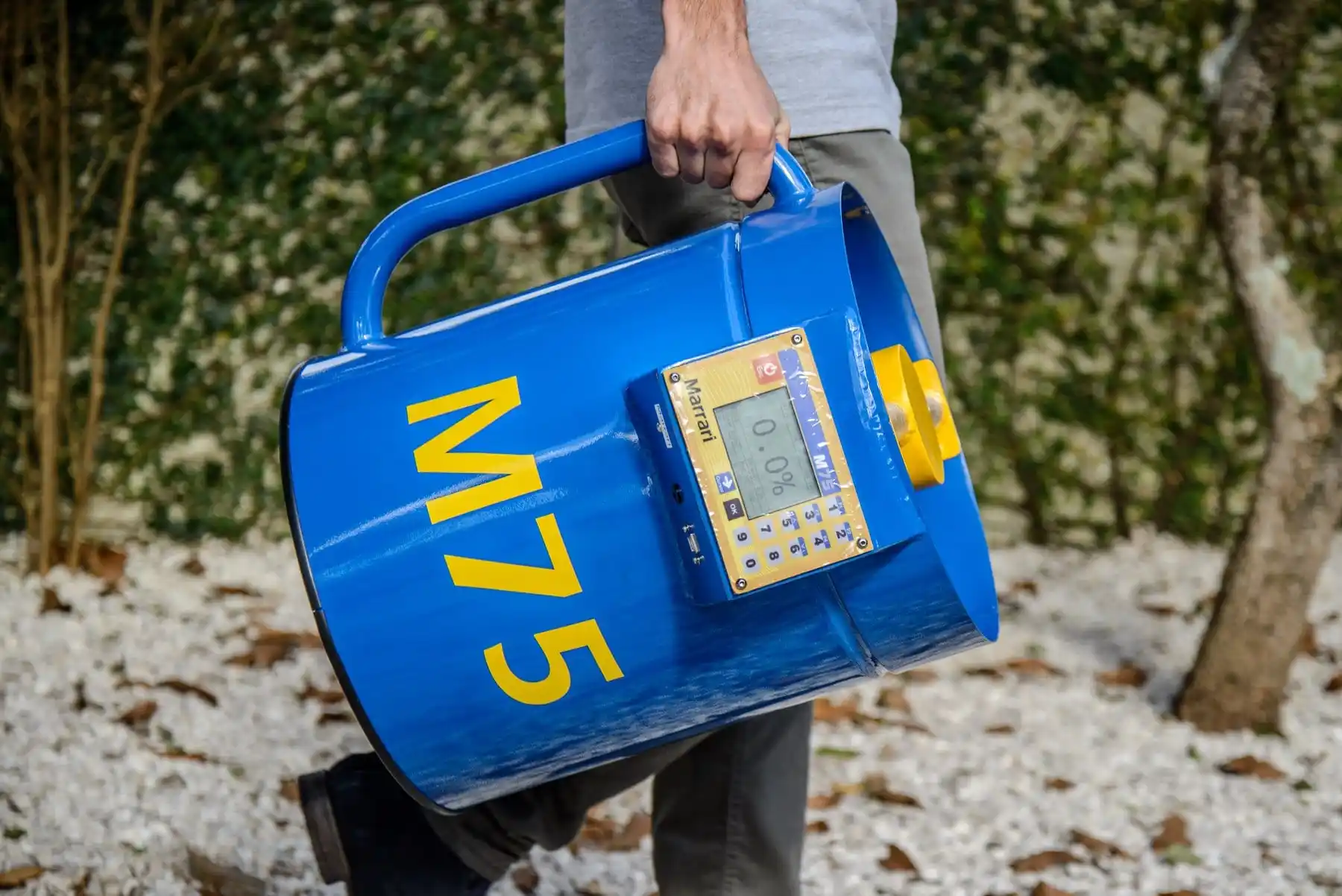
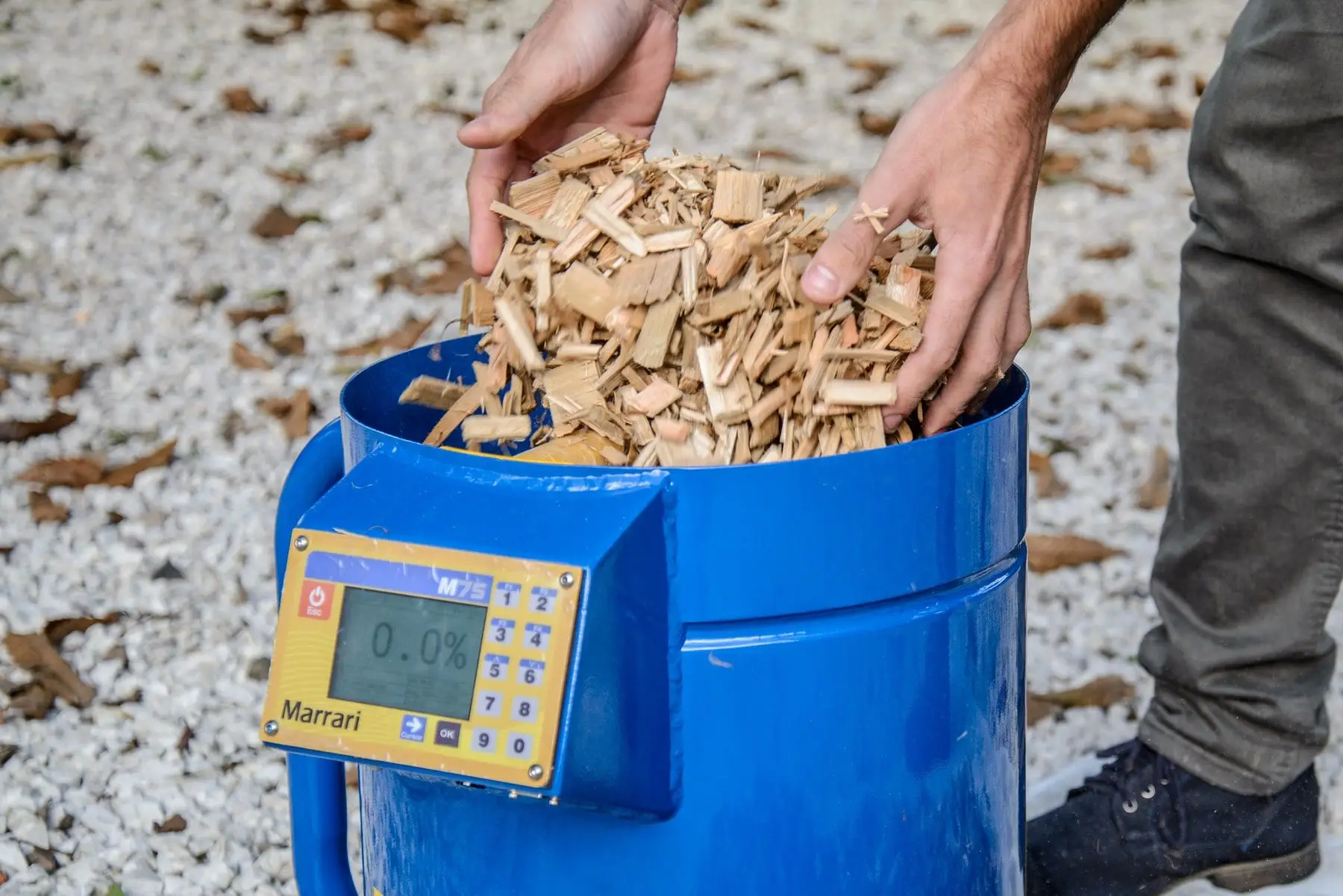
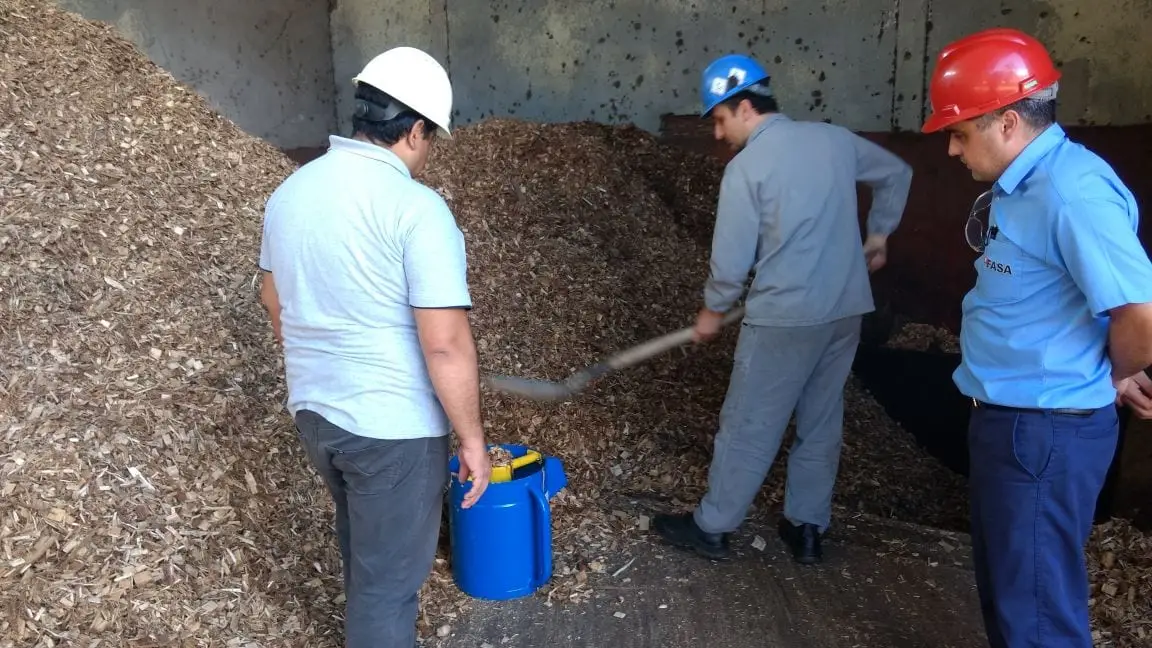
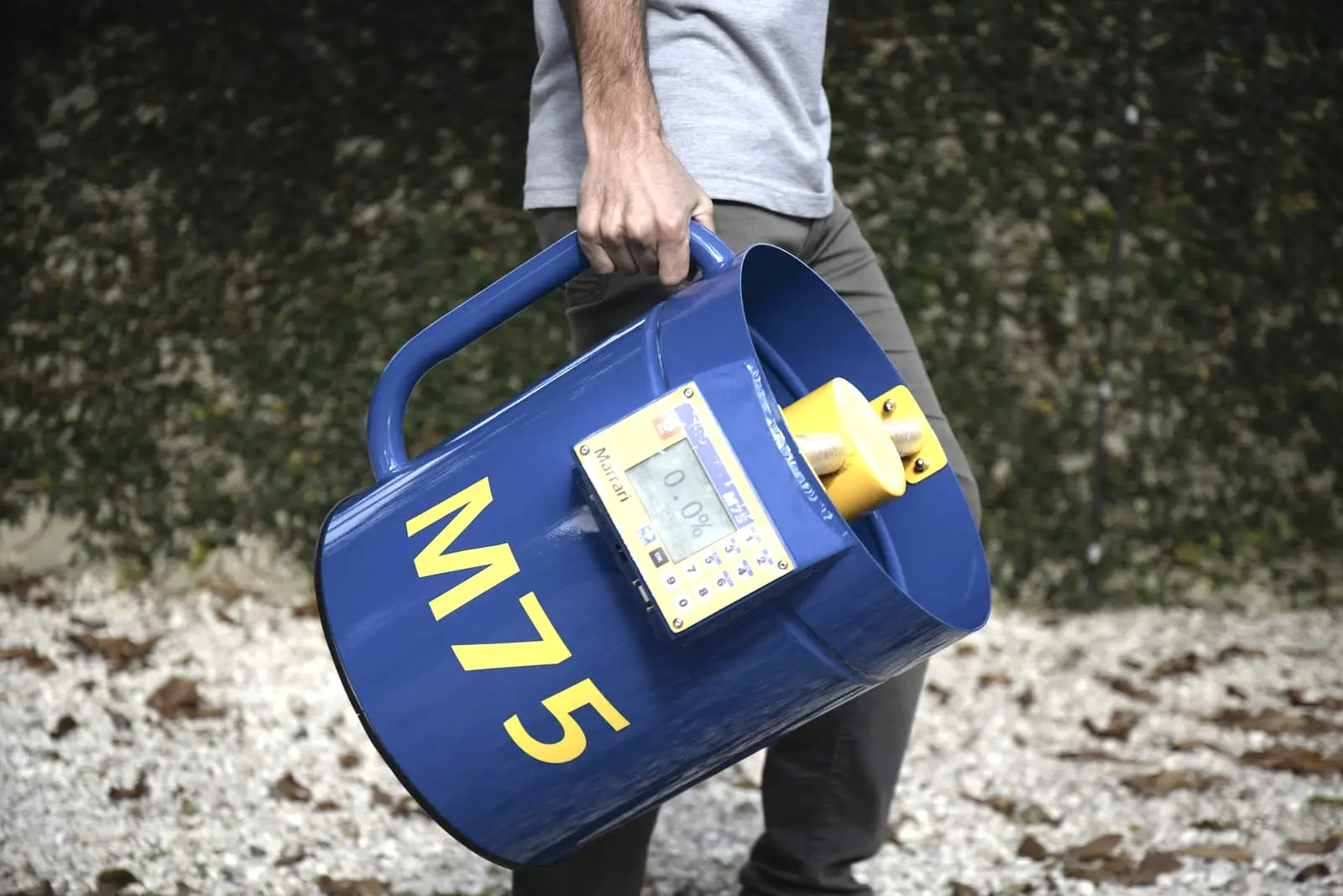
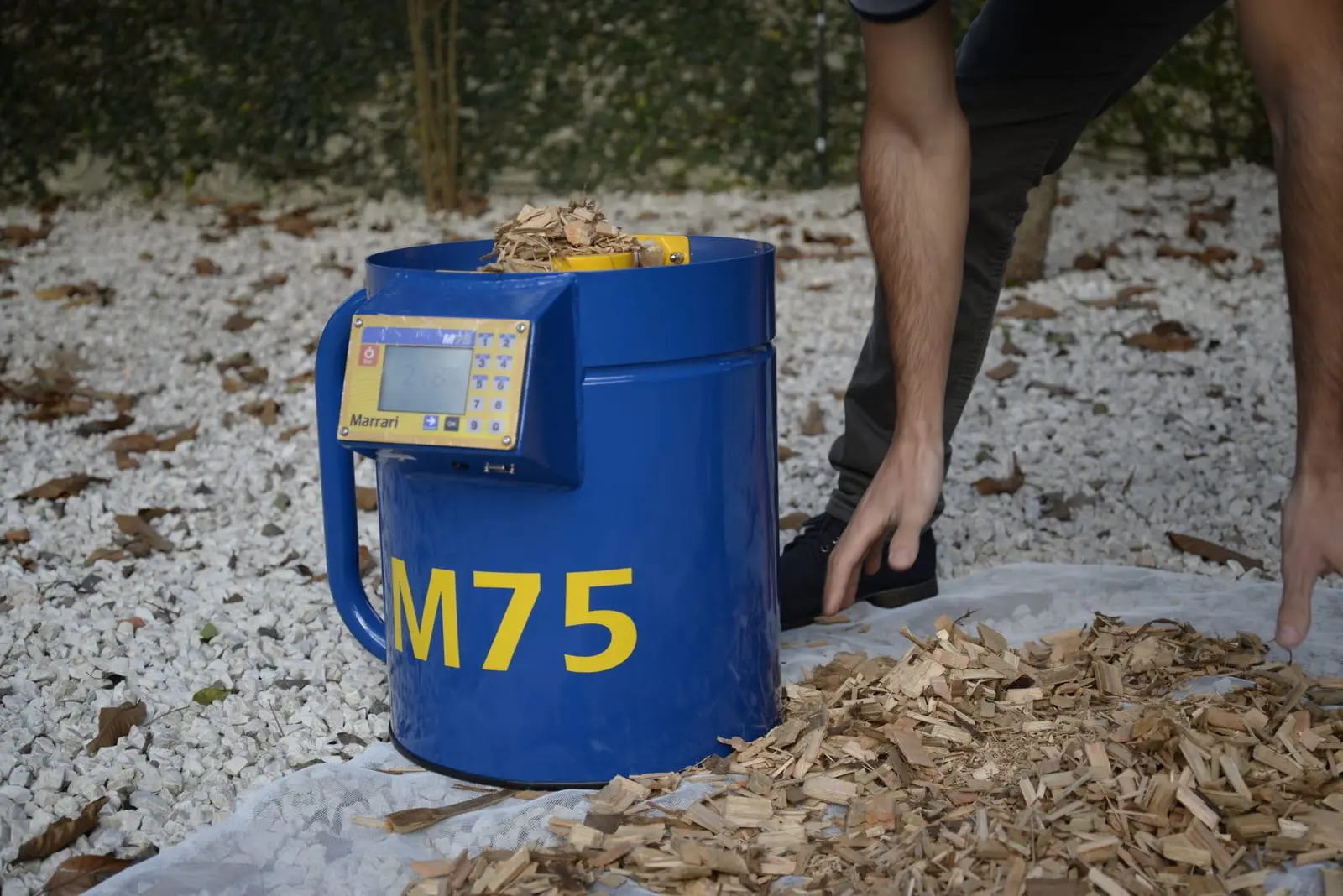
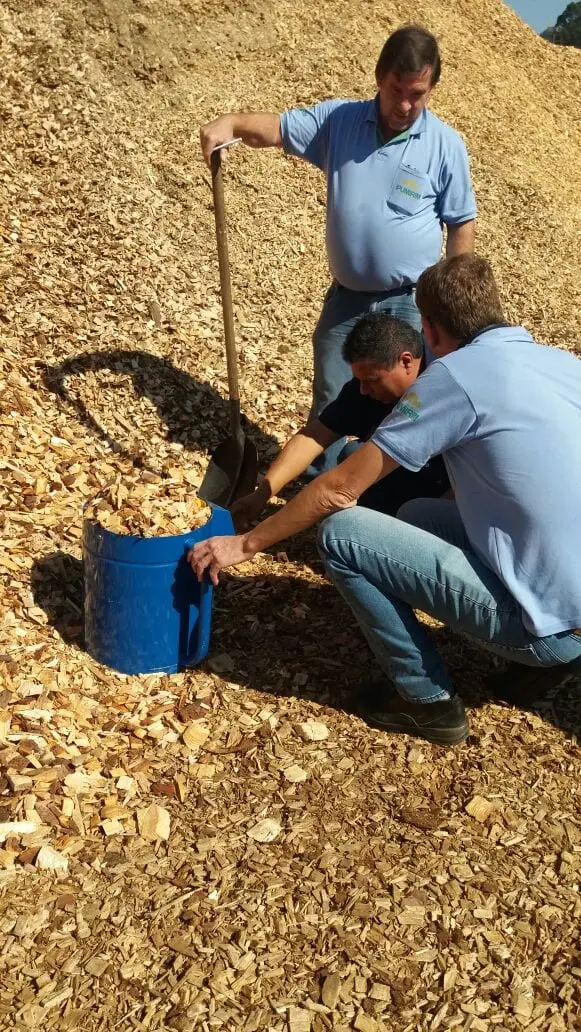
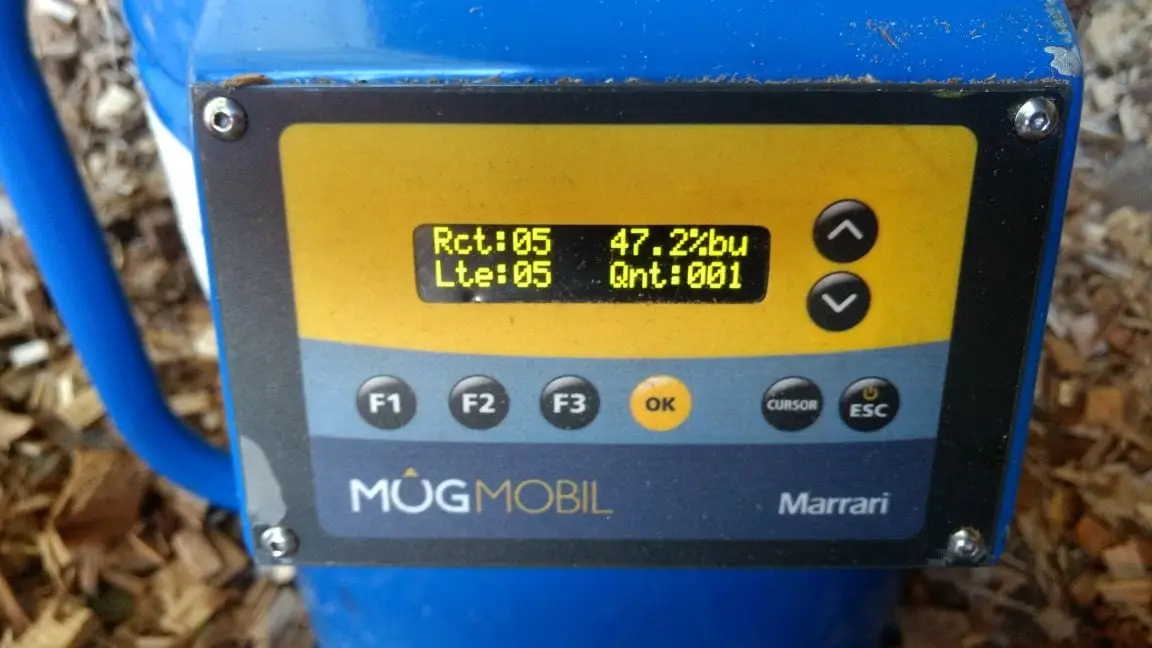
The M75 is a portable moisture meter for biomass and granulates, Marrari’s “bucket”. Fill the bucket with 35 liters of material, without compacting, and instantly read the moisture and the net calorific value (NCV) on the display. It measures by the dielectric principle, with a recipe for each material: it is used as a moisture meter for wood chips, sawdust, sugarcane bagasse, husks and other organic granulates, by anyone who buys, receives or burns biomass. Readings go to the UmiData software, which creates the reports.
- Bluetooth,
Wi-Fi and USB, with Android app 14 h battery life
- Who it is forAnyone who buys, receives or burns biomass, and pellet plants
- MaterialsWood chips, sawdust, shavings, bagasse, husks and other organics
- Recipes10
ready-made and 10 programmable, one per material - RecordsUp to 5,000 readings in 100 batches, with UmiData reports
Why measure biomass moisture and NCV?
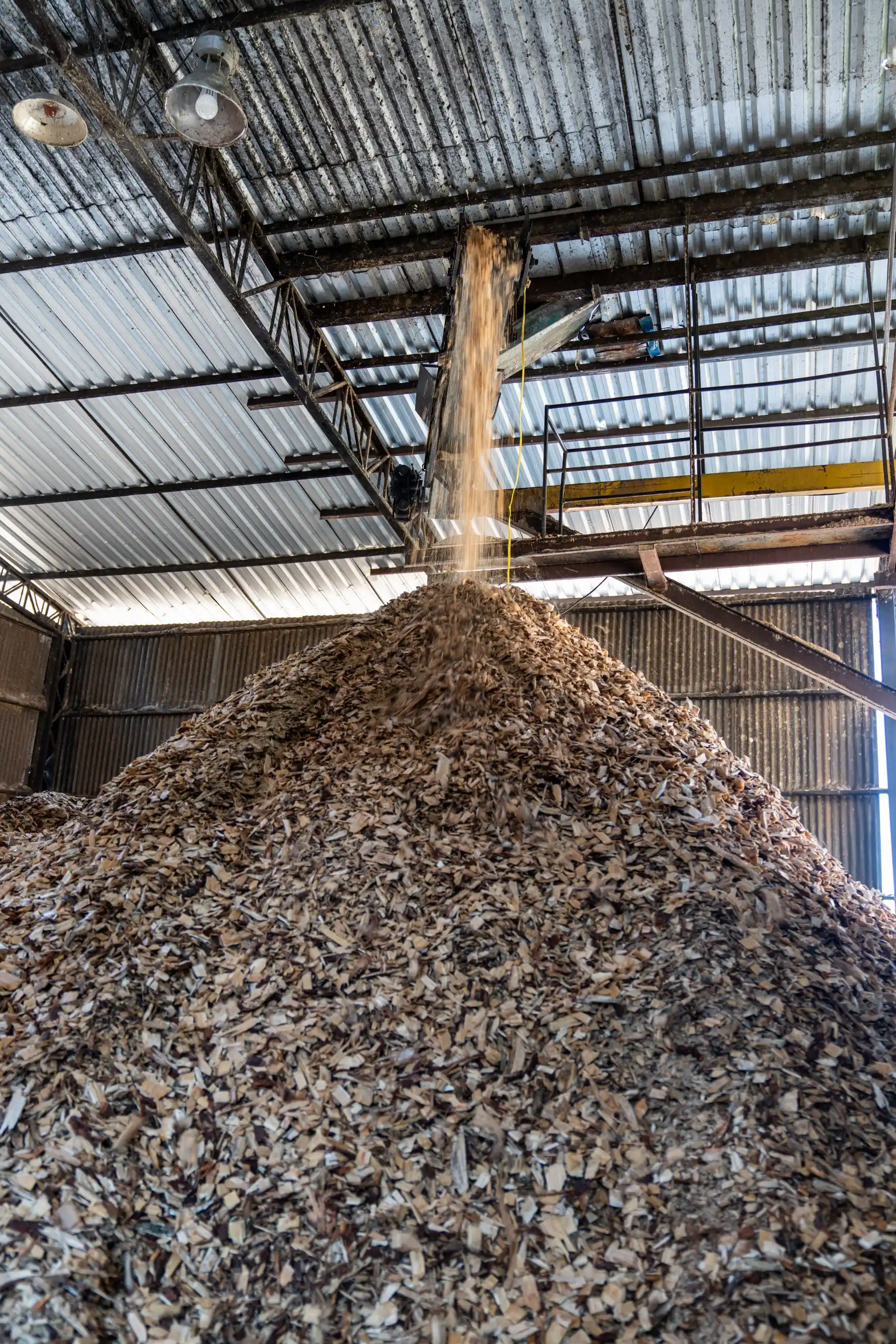
Water does not burn. With moisture and NCV measured as the load arrives, you see the energy you are buying, not the weight of the water, and decide on the spot whether to accept, discount or return it. Read about wood chip moisture content measurement. See how to measure biomass moisture.
- Pay for energy, not water: the NCV shows how much heat the load delivers.
- Fair moisture discounts: the UmiData calculator rates each supplier.
- Instant result, no
24 h wait for the lab, with a35 L sample instead of200 g.
Which materials does the biomass moisture meter measure?
Any granular organic material within the measuring range, choosing the material recipe on the meter. Material not on the list? UmiLab, Marrari’s laboratory, creates the recipe from a sample. The M75 biomass moisture meter shows the result on the spot, already with the net calorific value (NCV).
Eucalyptus chips · Pine chips · Mixed chips · Shavings and sawdust · Sugarcane bagasse · Husks and shells (rice, coconut, orange, peanut) · Biomass in general · Coffee and coffee grounds · Grain and seeds · Charcoal
- Eucalyptus chipspulp and boiler fuel; shows how much of the load is wood.
- Pine chipsboilers, panels and pellets; pay for wood, not water.
- Mixed chipspine with eucalyptus, measured with the mix recipe.
- Shavings and sawdustsawmill residues for heat and pellets.
- Sugarcane bagasseburned in sugar mills; too wet, it smothers combustion.
- Husks and shells (rice, coconut, orange, peanut)farm residues; each husk has its own calorific value.
- Biomass in generalother organic residues; UmiLab creates the recipe.
- Coffee and coffee groundsthe bean in storage and the grounds from extraction.
- Grain and seedssamples at receiving, before storage.
- Charcoalhow much of the load is charcoal and how much is water.
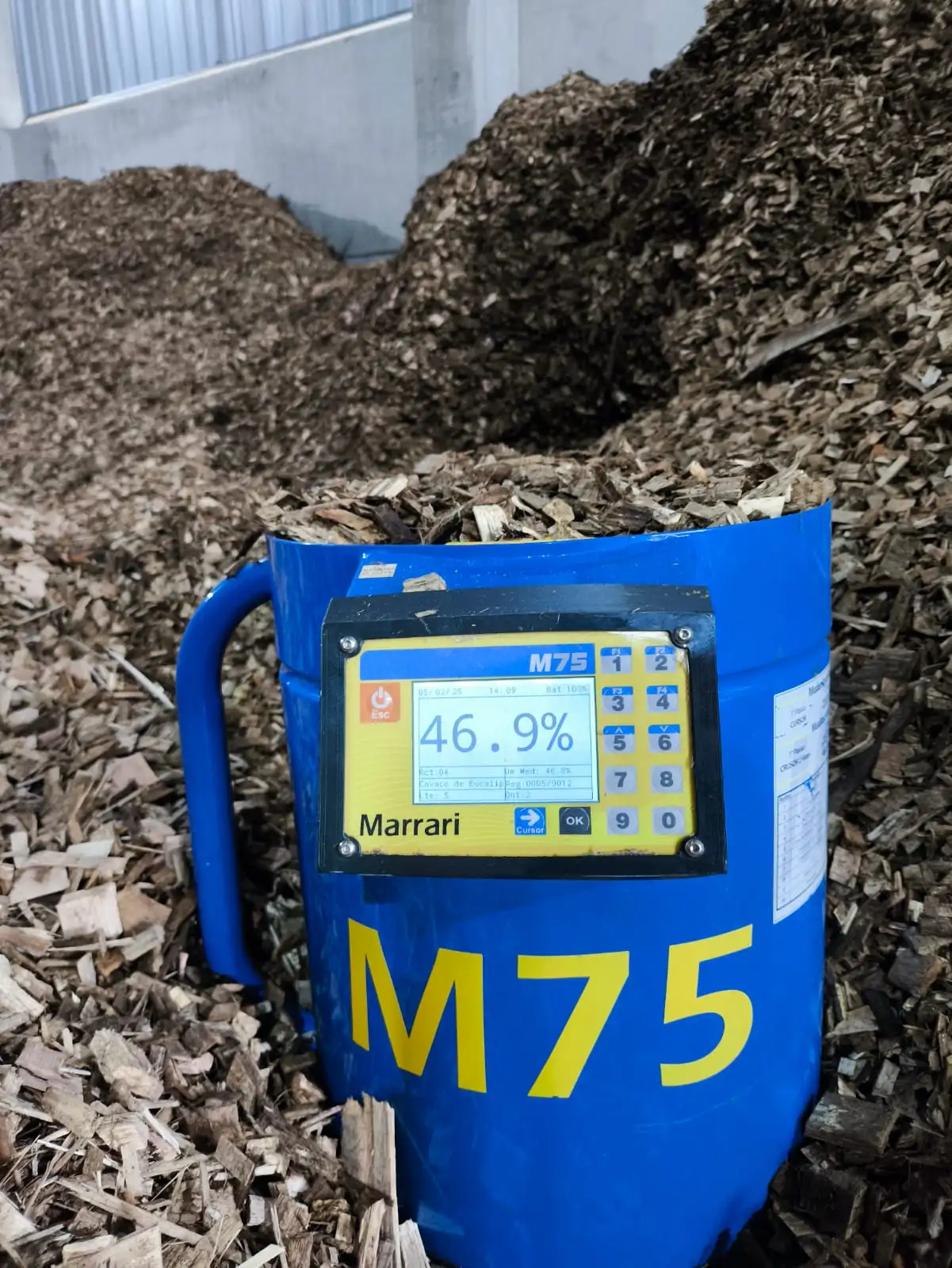
How does the M75 biomass moisture meter work?
The sensor sits at the center of the bucket and measures by the dielectric principle: the water in the material changes the sensor’s electric field, and the recipe converts that reading into moisture and NCV.
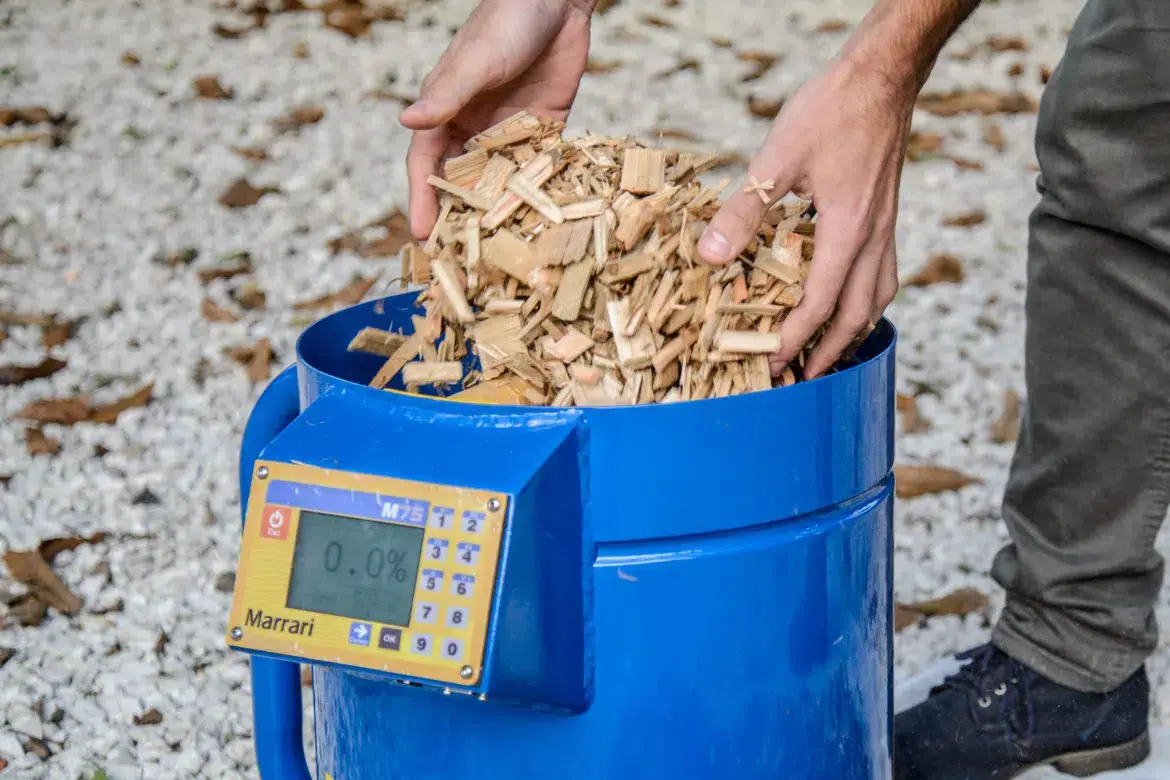
- Fill the bucket
35 liters of material, without compacting or shaking.
- Choose the recipe
One per material, on the meter keypad.
- Read it instantly
Moisture and NCV on the display, with temperature compensation.
- Create the report
Over USB,
Wi-Fi or the app, readings go to UmiData: batch, period and supplier.
How do the M75 app and UmiData work?
Besides the USB cable, the M75 downloads its readings wirelessly, in three ways: over Bluetooth, in the Android app, the same for the M75 and the M75D; over the meter’s own
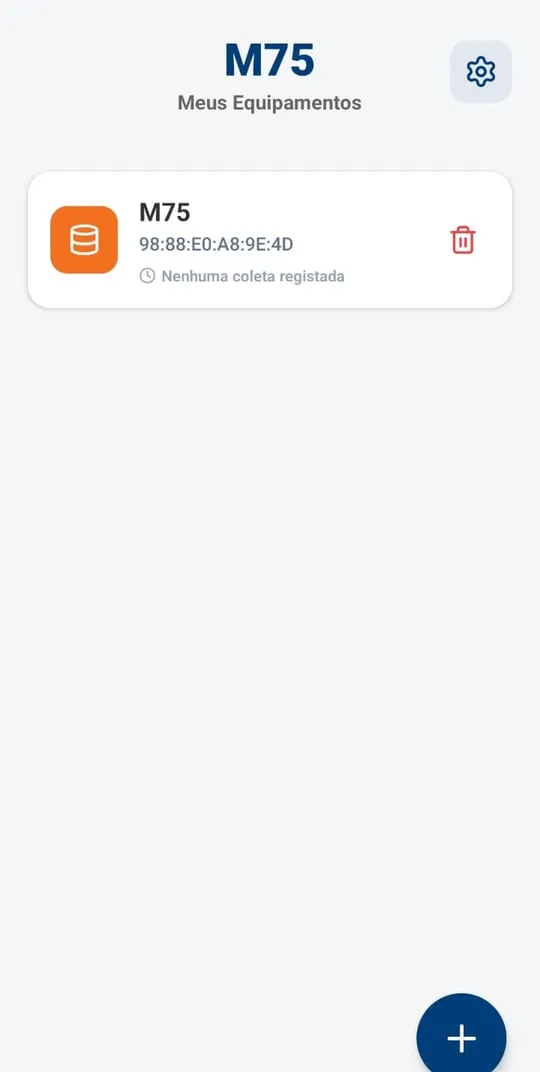
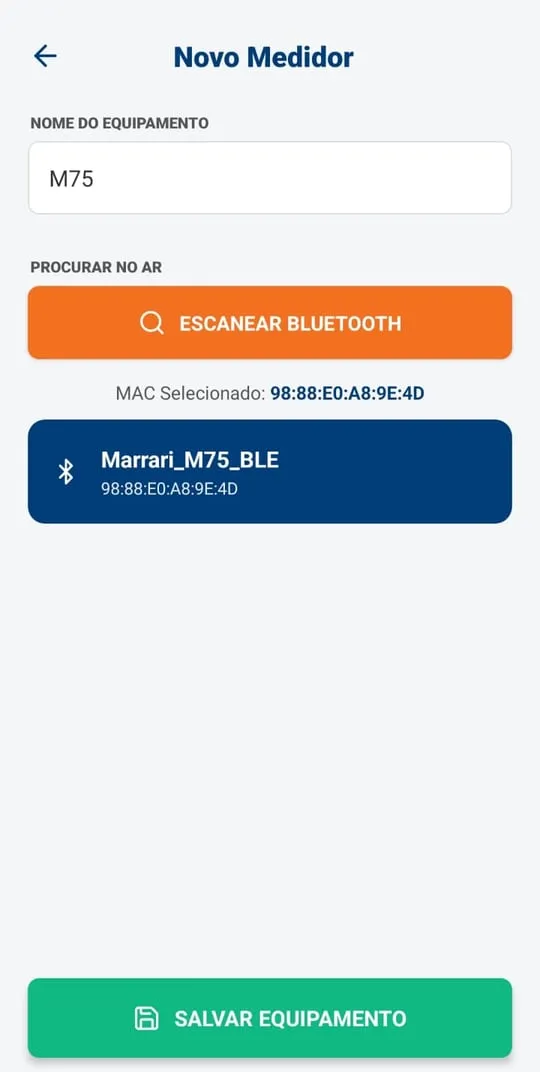
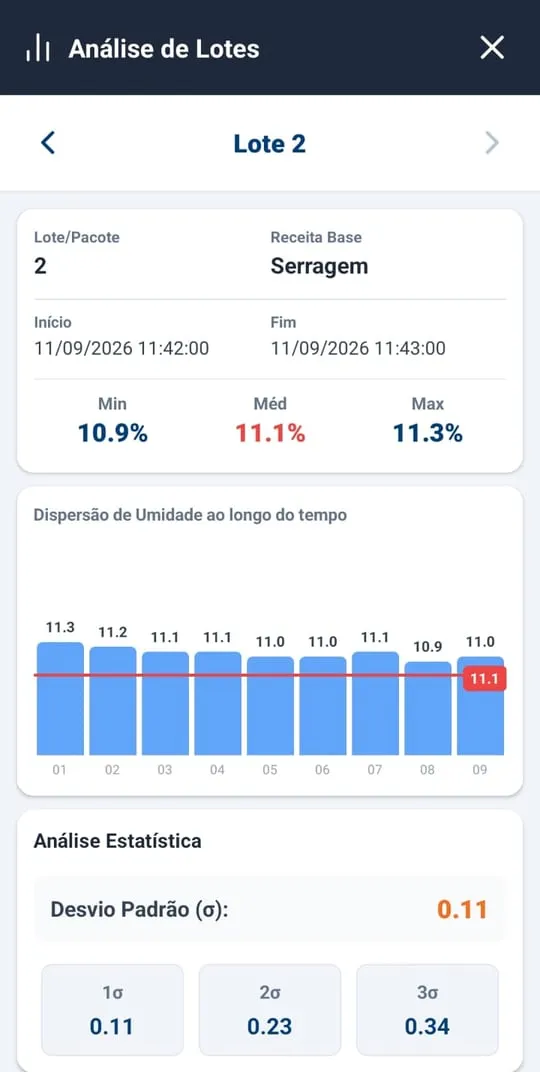
How to read this screen
- Each meter is registered once: the phone finds it over Bluetooth and saves it under a name, in "My Equipment".
- When collecting, the app extracts the meter’s readings and recipes and shows each batch: recipe, start and end, minimum, average, maximum, moisture reading by reading and the standard deviation.
- The batch goes to UmiData directly over the
Wi-Fi network or as a JSON file via WhatsApp, Drive ore-mail. Then the app sets the meter’s clock and clears its memory.
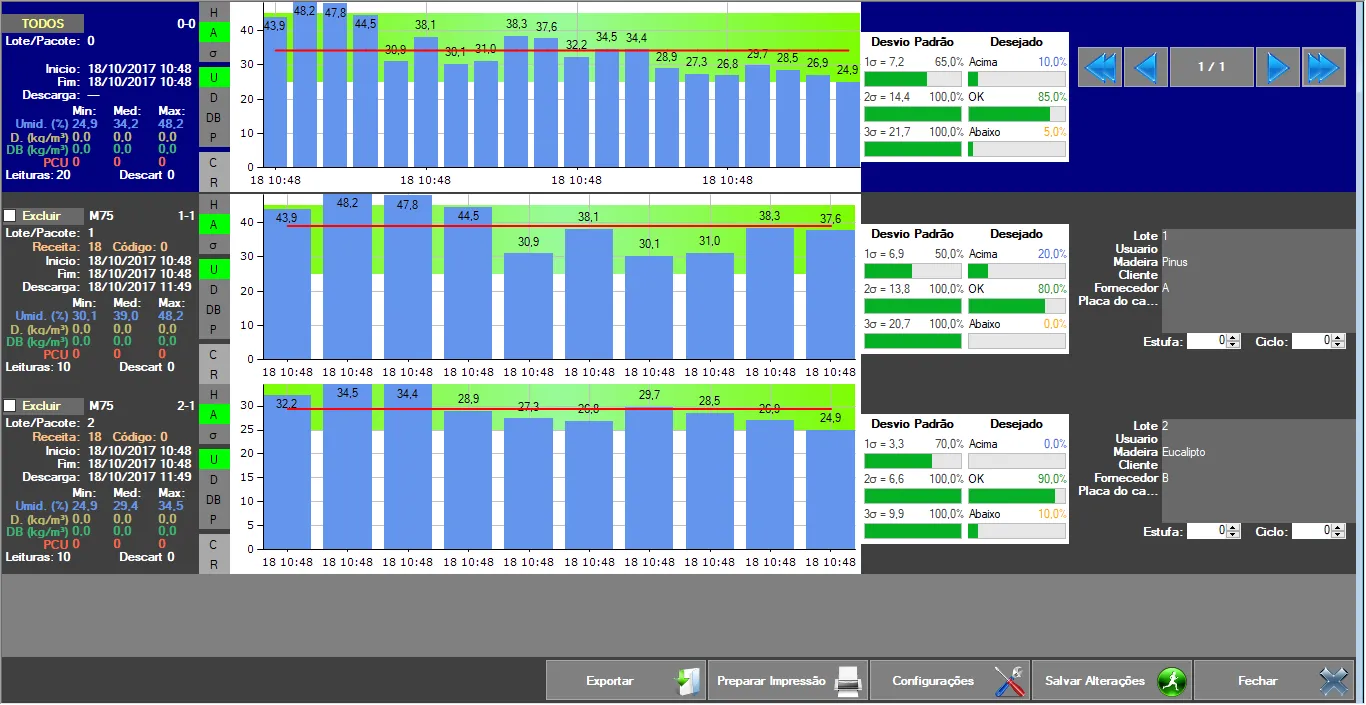
How to read this screen
- Each bar is one reading, in the order taken, and the red line is the batch average.
- The green band marks the target moisture. Next to it, the share of readings above, within and below it.
- Each batch shows the minimum, average and maximum and the fields you set up, such as wood, customer and supplier.
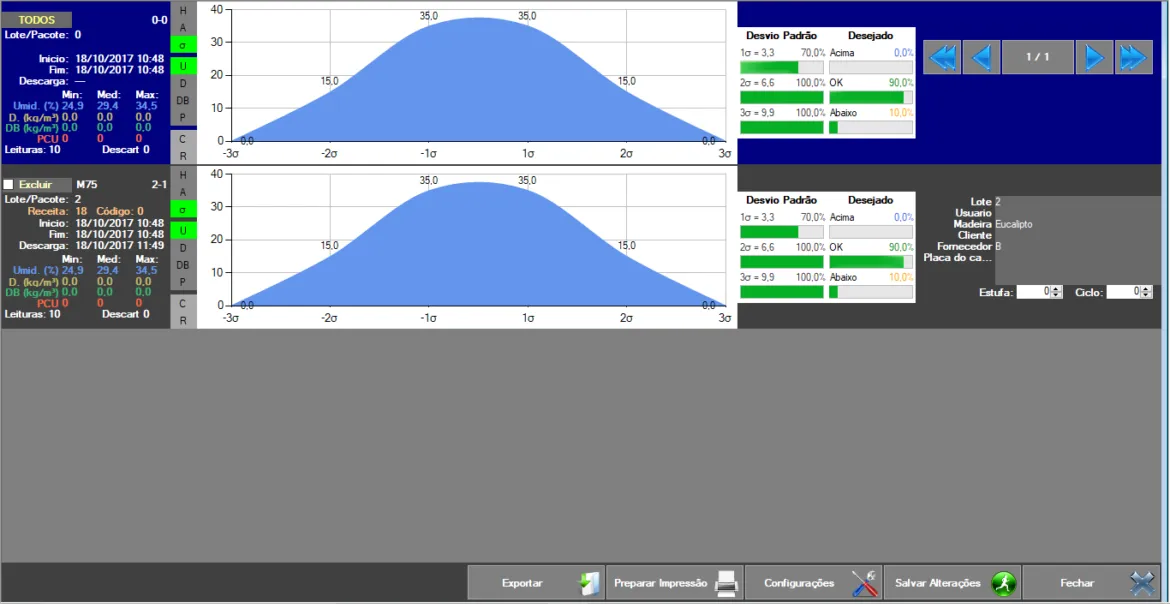
How to read this screen
- The curve shows how the readings spread around the batch average.
- The 1σ, 2σ and 3σ deviations tell whether the batch is uniform or has pieces far from the average.
- The same batch also appears as a histogram: how many readings fall in each moisture range.
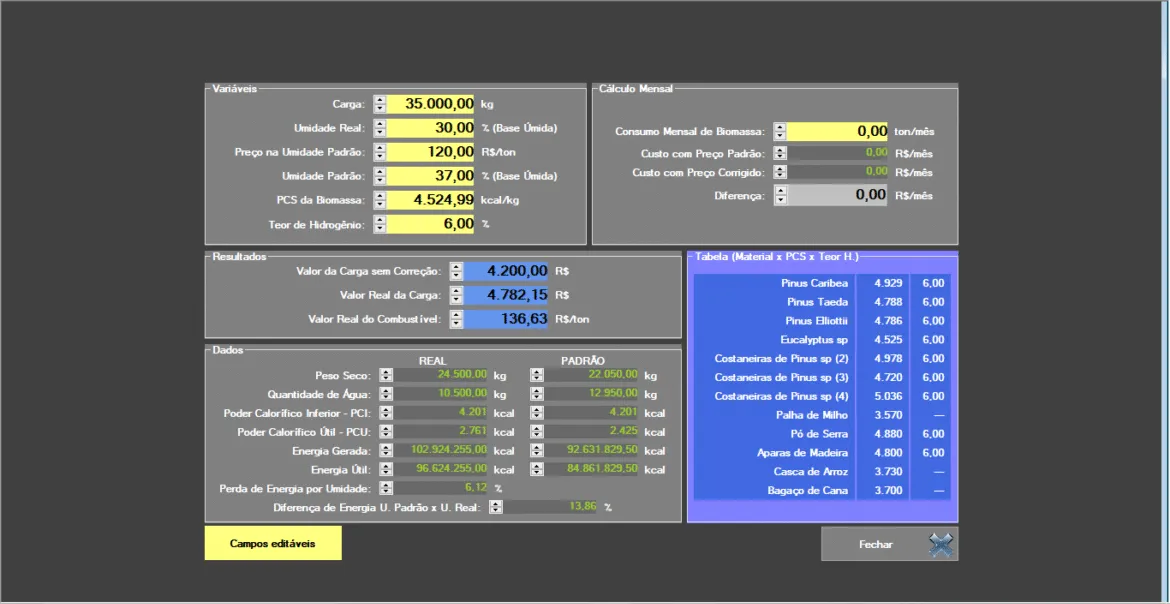
Work out the value of your biomass load
How to read this screen
- You enter the load, the measured moisture, the contract moisture and price, the GCV and the hydrogen content of the material.
- UmiData works out the real value of the load from the useful energy, the energy lost to moisture and the cost difference over the month.
- The table next to it lists the GCV of common materials, such as pine, eucalyptus, rice husk and sugarcane bagasse.
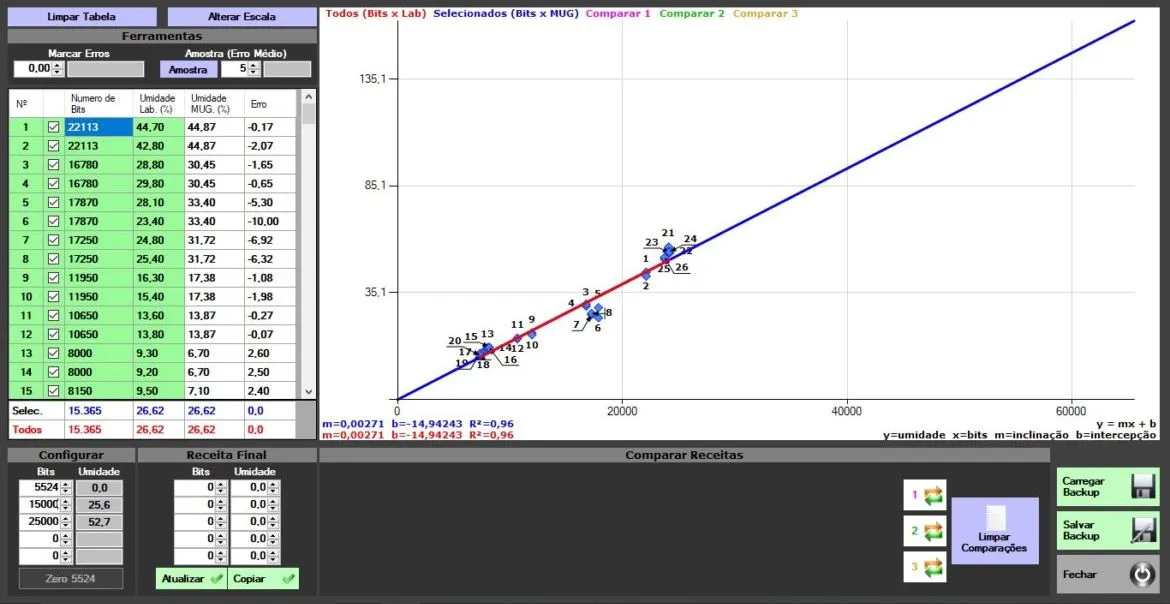
How to read this screen
- Each point is a sample: the meter reading against the moisture measured in the laboratory.
- The software draws the material line and shows the error of each sample. Those above the acceptable error are flagged.
- You can compare up to 3 recipes before sending the new one to the meter.
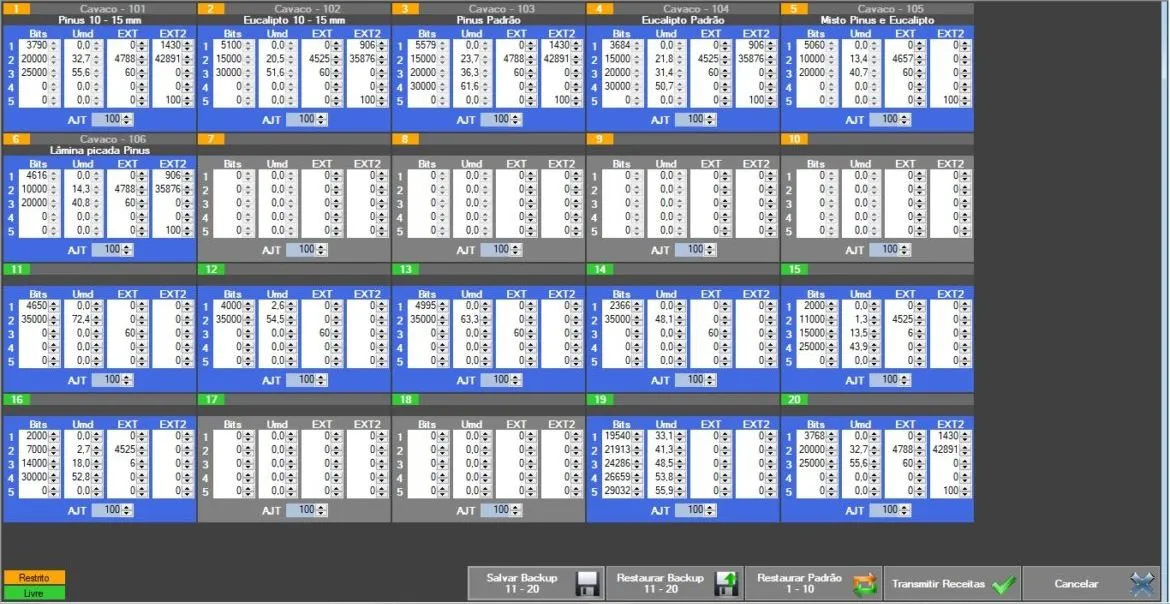
How to read this screen
- The meter has 10 ready recipes, which cannot be changed, and 10 slots for new recipes.
- Each recipe is the curve of one material, such as pine or eucalyptus chips.
- With the meter connected to the computer, you pick the recipe and send it to the meter.
Who uses the M75
In the yard, the M75 measures the moisture of a
Companies using the M75: Ambev, BRF, JBS, ADM and ArcelorMittal Bioflorestas.
In the video testimonial (in Portuguese), Reflorestadores Unidos, from Brazil, explains how it uses the M75 to make
“With this equipment (M75), we have the result before the biomass is fully unloaded, ensuring that we pay exactly for what we buy: quality biomass, not water.”
- Biomass, not wateryou pay for what you buy, says Ambev
- Before unloadingthe result comes before it ends (Ambev)
- Lower coston
high-quality pellets (Reflorestadores Unidos) - PCUnet calorific value alongside moisture
Companies using M75


What is the biomass load that arrived really worth?
Wet biomass delivers less energy per tonne. Enter the contract moisture and the load moisture and see the fair price for the energy, the same calculation as the UmiData biomass calculator. See how to save biomass.
Want to cut this loss? Request a quote
Calculator unlocked. Enter your process numbers.
How the calculation works
LHV = GCV − 600 × (9 × H ÷ 100) and NCV = LHV × (1 − M) − 600 × M, in kcal/kg, with H = 6% hydrogen (typical of biomass) and M = moisture on a wet basis (fraction). Fair price = contract price × measured NCV ÷ contract NCV. GCV = gross calorific value; LHV = lower heating value; NCV = net calorific value. For chip blends, the GCV is the weighted average of the pine and eucalyptus GCVs, in the proportion shown in the name (pine/eucalyptus).
GCVs are the UmiData table values; for pine, rice husk and coconut husk, those from the article on calorific value; for shavings, black wattle, tropical hardwood, eucalyptus bark and peanut shells, those from research by Embrapa, IBAMA, IPEF and Brazilian universities (Protásio et al., 2011; Costa Junior et al., 2023; Quirino et al., 2005; Liberato et al., 2023; Dourado et al., 2017); approximate values. The M75 calculates the NCV instantly, with your material recipe, and UmiData runs the same price calculation with your load data.
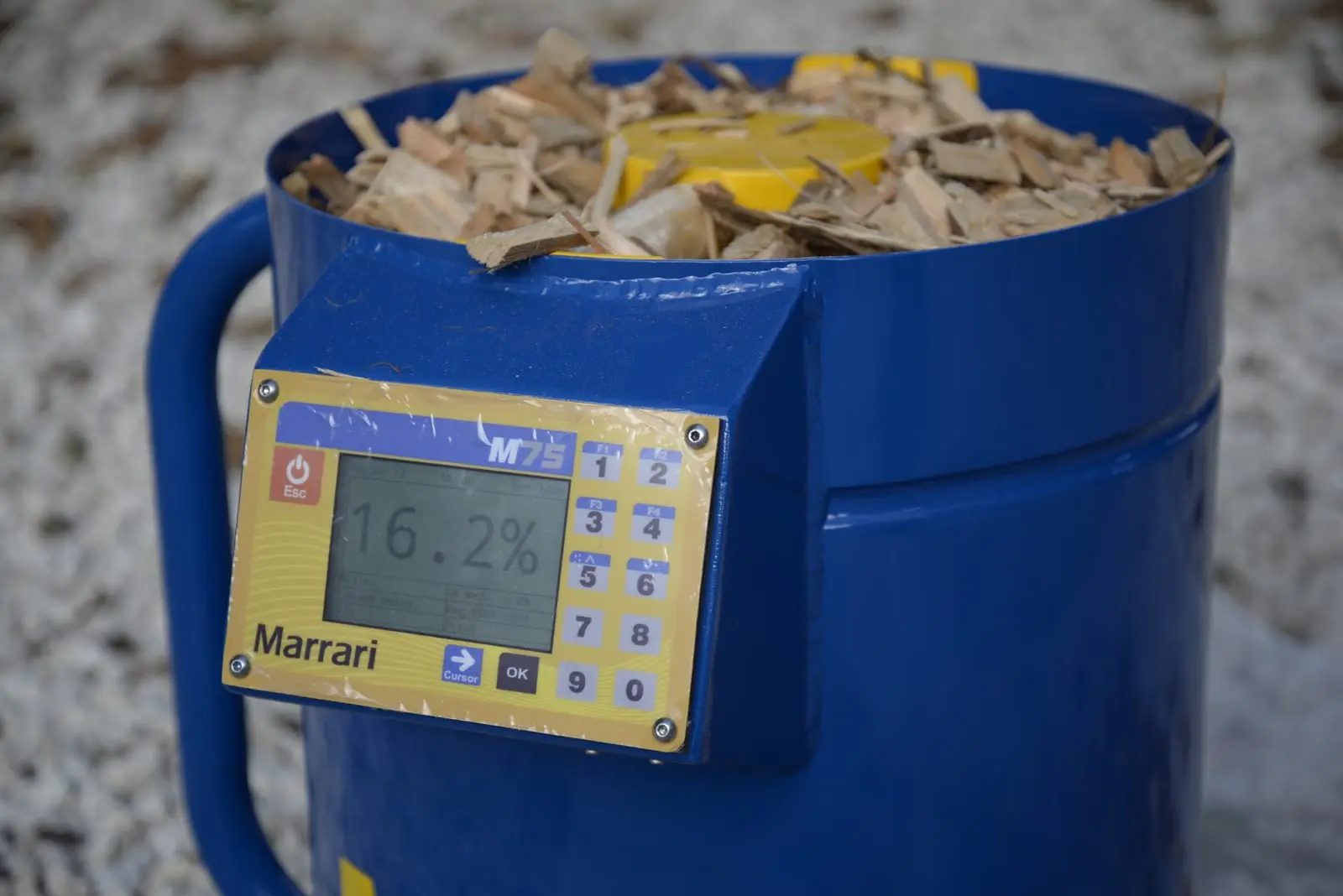
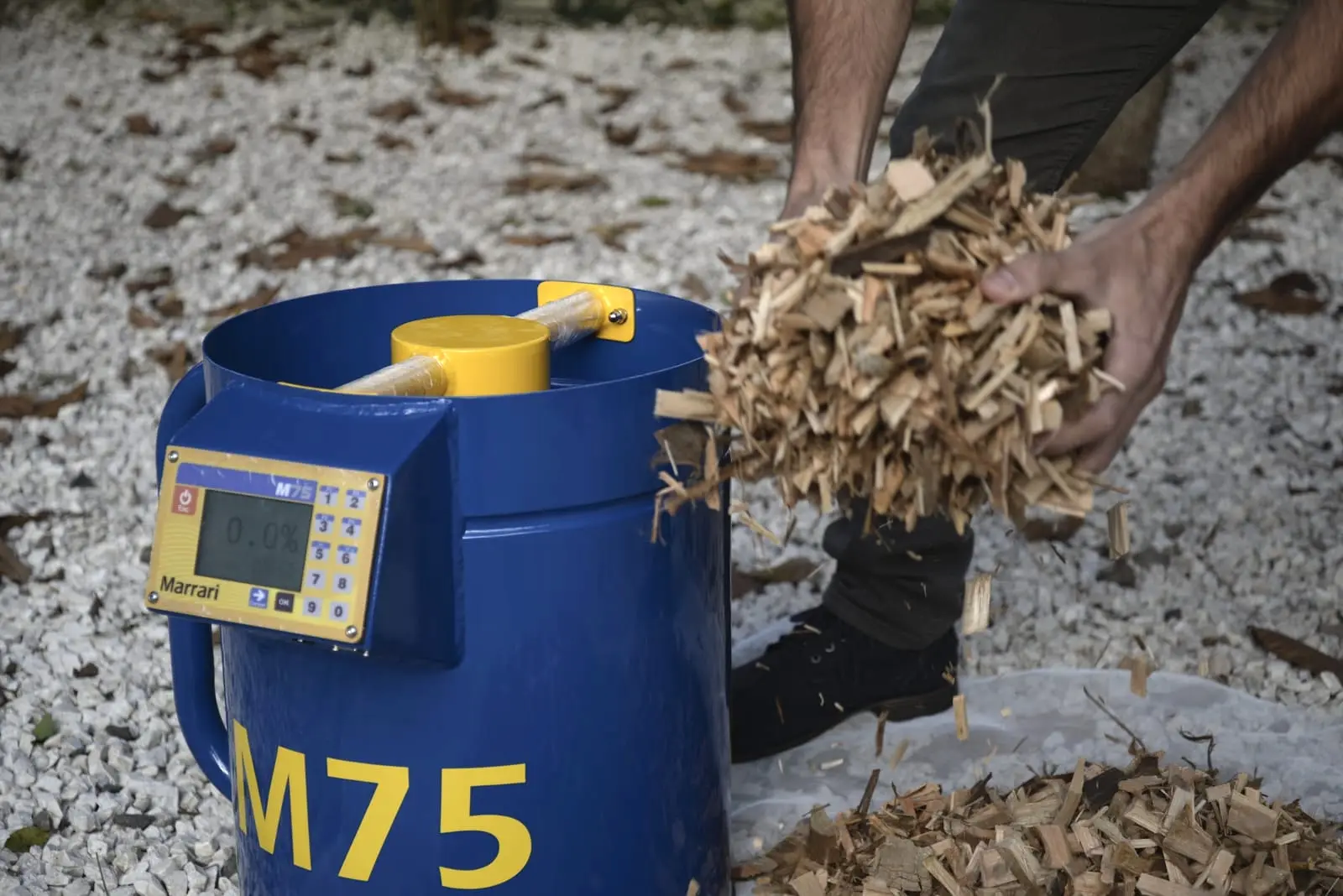
M75 photos
Real product photos. Click or tap a photo to enlarge it.
Technical specifications of the M75
Measurement
| Measuring principle | dielectric; instant reading on the display |
|---|---|
| Measuring range | 3 |
| Accuracy | ±2 percentage points on process chips; ±3 on biomass |
| Calorific value | estimates the sample net calorific value (NCV) from the recipe gross calorific value and hydrogen content |
| Recipes | 10 predefined and 10 programmable |
| Calibration | recipes adjusted with laboratory results in the Tracker software; traceable calibration certificate by UmiLab |
| Temperature | operation up to |
| Sample | 35 liters, bucket full and not compacted |
Instrument and data
| Mass and dimensions | |
|---|---|
| Display | |
| Battery | |
| Memory | up to 5,000 readings in up to 100 batches, with date and time |
| Communication | USB to PC; wireless: Bluetooth with the Android app (the same as the M75D) and |
| Software | UmiData 5 (moisture and NCV reports in Excel or PDF) and Tracker (recipes) |
| Accessories | charger, USB cable and backpack |
| Maintenance | annual preventive maintenance at Marrari; weekly zeroing and cleaning by the user |
Frequently asked questions about the biomass moisture meter
What types of materials can it measure accurately?
How do I adjust the M75 calibration for my material?
What are the UmiData software and UmiData Server?
Does the M75 measure density?
What is the M75 warranty?
Does Marrari offer a biomass assessment?
Does Marrari offer M75 training?
How does buying from outside Brazil work?
No question with that term. Try another word or talk to the team on WhatsApp.
Request a quote: M75
Free and with no obligation. A Marrari specialist replies within 24 business hours.
- Installation and integrationNone needed: the M75 is portable and arrives ready to measure. User training is booked on the trainings page, for the day and time you choose.
6-month warrantyFor all Marrari systems and equipment.- Support and calibrationSupport in Brazil and Latin America; new recipes from the UmiLab laboratory.