
Wood drying depends heavily on three variables that, when well controlled, determine whether drying succeeds: temperature, relative humidity and air circulation.
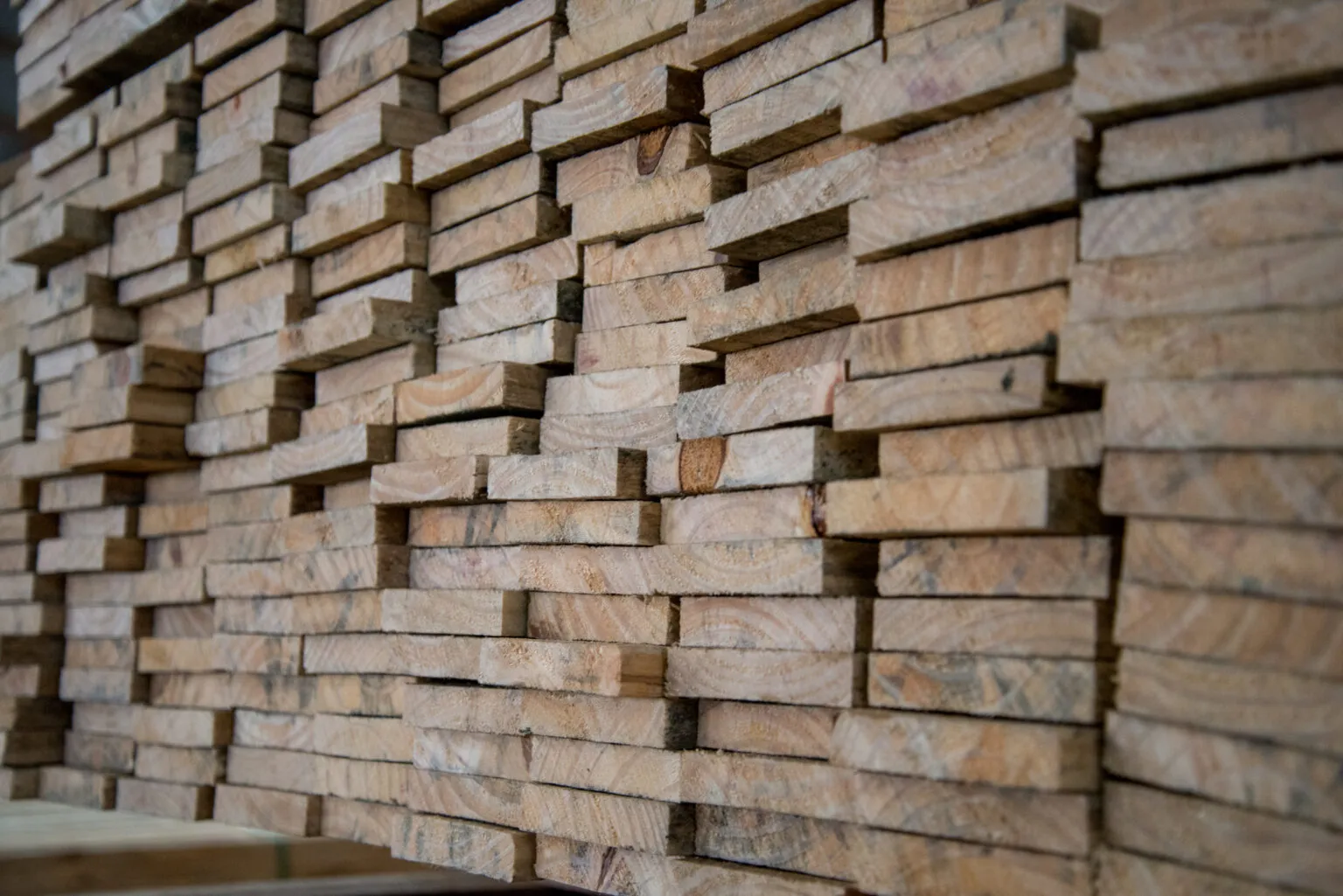
Air circulation depends on fan capacity and on the spacing between boards, achieved with stickers (sticker spacing).
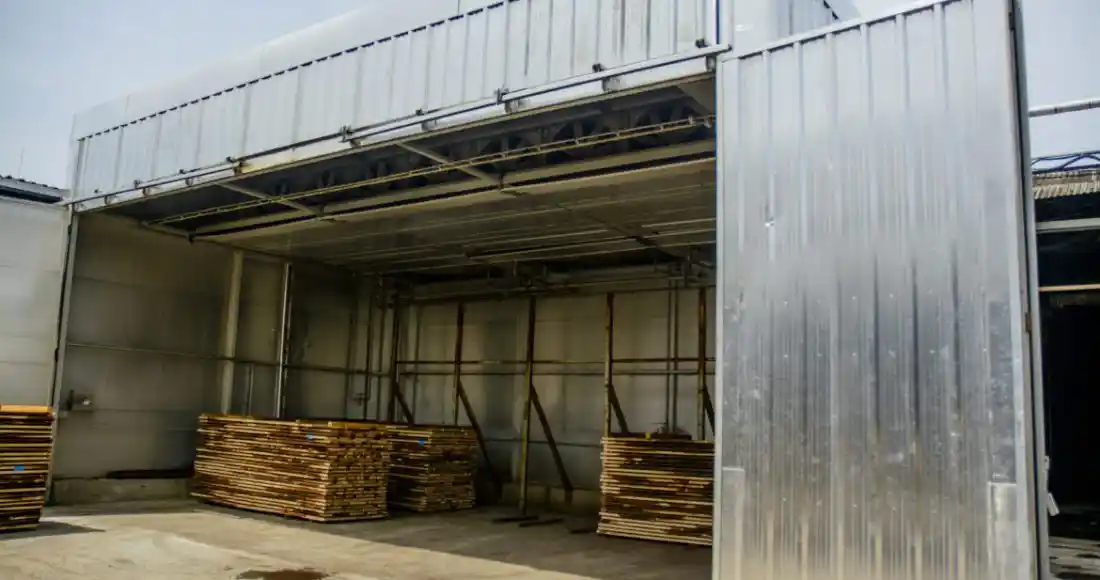
Ventilation: little to change after the design stage
In the ventilation system (fan motors and blades), little can be changed once the kilns have been designed and built. Interventions usually come down to blade angle and checking the direction of rotation.
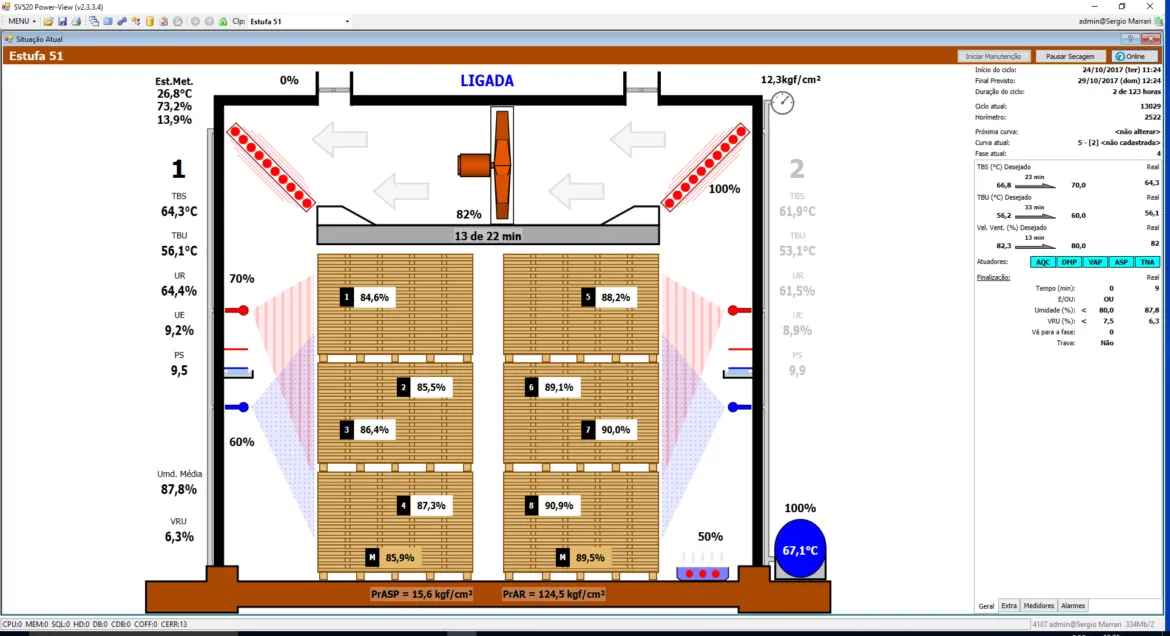
Stickering: where most improvements can be made
Stickering offers many options: increasing sticker height and width, the number of stickers per stack, using one or more layers of boards and aligning the stacks.
As a rule, changes aim to increase the amount of wood available to the process. In many cases, however, more wood in the kiln does not mean more dry volume per month, because poor air circulation lengthens cycles and sends significant volumes of wood back for

Ideal air velocity leaving the stacks
The rule for the ideal airflow leaving the stacks splits woods into two groups.
The correct way to measure air velocity is with an anemometer. Measurements should be taken along the whole kiln and in both fan rotation directions.
To control temperature, relative humidity and ventilation throughout the cycle, see Marrari’s drying kiln management solutions.
Author: Ricardo Uchoa, Technical Coordinator at Marrari Automação
Did you like this article?
Could this article help someone on your team? Send the link to a colleague: