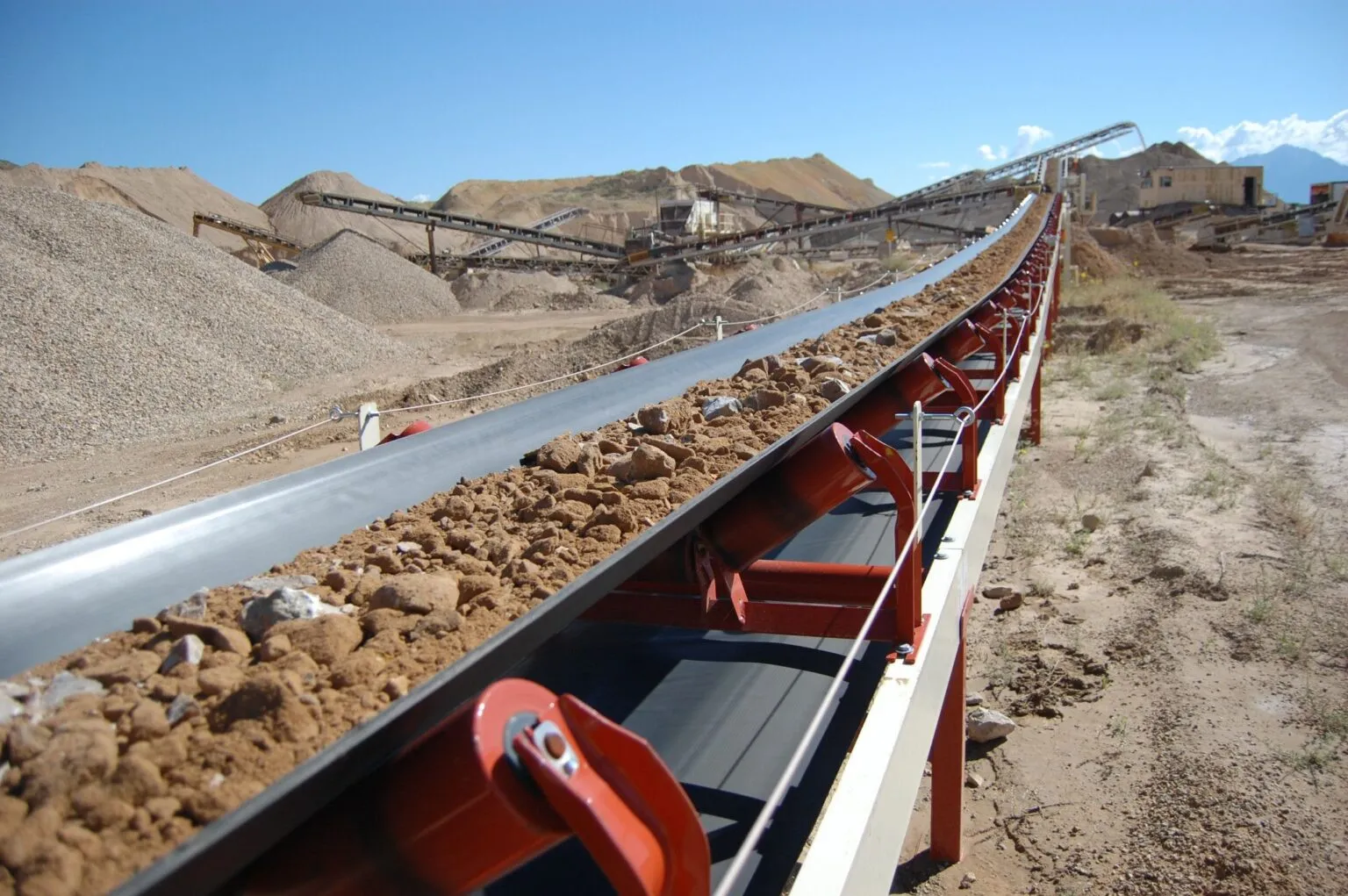

Accurately measuring granular materials on conveyor belts is a constant challenge in industry, especially in mining, agriculture and construction materials. Variations in material density, harsh environmental conditions and frequent maintenance needs are among the main obstacles.
Challenges of measuring material on conveyor belts

1. Variable material density
The density of granular materials can vary widely, affecting the accuracy of volume and mass flow measurements. Several factors drive this variation:
Compaction and settling: during conveying, material can compact or settle unevenly, causing density variations along the belt. This behavior can be unpredictable and depends on belt speed and material characteristics.
Particle size: granular materials such as grain, ore and aggregates contain particles of different sizes. Smaller particles tend to pack more tightly, increasing bulk density, while larger ones leave more voids and reduce it.
Moisture levels: moisture is a critical factor. Dry materials have different densities from wet ones, and water absorption can significantly increase material weight and change mass flow.
2. Impact of the operating environment
Industrial environments have harsh conditions that can hurt measurement accuracy:
Extreme temperatures: intense heat or cold can affect sensors and electronics. High temperatures cause thermal expansion, while very low temperatures can slow sensor response.
Dust: dust is a constant challenge, especially in mining and agriculture. Buildup on sensors can block readings and reduce accuracy, requiring frequent cleaning.
Vibration: industrial machinery generates vibration that can destabilize measuring sensors, causing shifts or erratic readings.
3. Frequent maintenance needs
Conveyor measurement systems work in demanding conditions that require constant maintenance:
Calibration and adjustment: frequent recalibration to maintain accuracy is an ongoing challenge, since systems must be adjusted for changes in material and environmental conditions.
Component wear: continuous movement and abrasive materials wear down components, a particular problem in mining, where hard, abrasive materials speed up wear.
Material buildup: fines and dust can build up on sensors and other components, blocking detection and causing incorrect readings, which calls for regular cleaning.
Solutions with Marrari Automação’s Volume X
Watch the system video (in Portuguese):
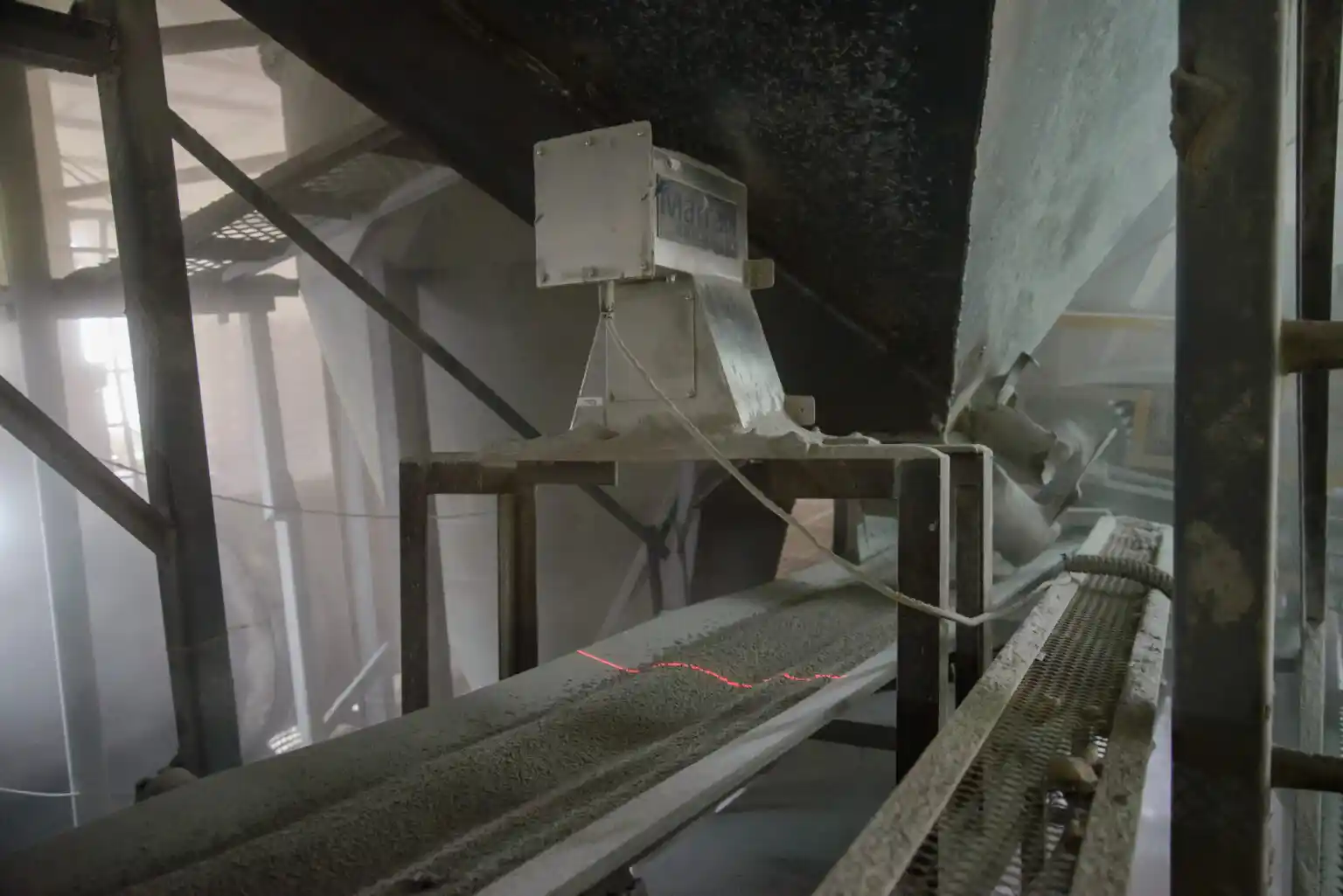
1. Non-contact volume measurement
Marrari Automação’s
2. Volume, mass and density
Using the density entered, the system calculates mass flow. When the weight is known, for example from a belt scale on the same line, it calculates the material’s bulk density, which can also be corrected automatically for moisture. Measurement accuracy is ±2% of the measured value and improves with more uniformly sized material.

3. Automation integration and reports
4. Alarms
The system issues alerts for production targets, overload and belt misalignment, so the team can act before a problem affects output.
Application examples
- Mining and aggregates: controlling crushing, limestone and ore production directly on the belts.
- Biomass: measuring the volume of wood chips and other fuels fed to boilers.
- Agribusiness: tracking the volume of grain and other granular materials moved through the plant.
Conclusion
Accurate measurement of granular materials on conveyor belts is essential for operational efficiency across many industries. Marrari Automação’s