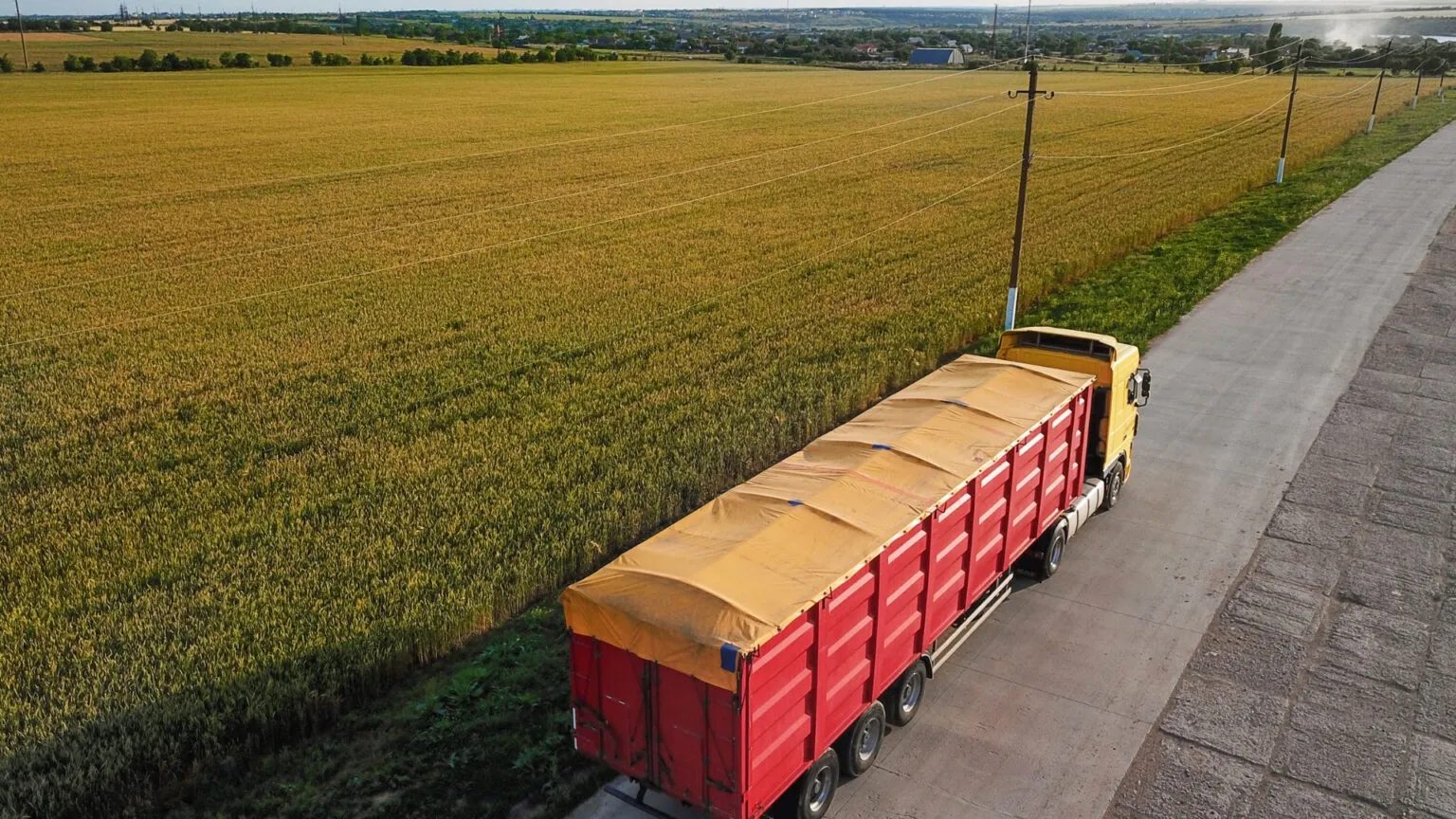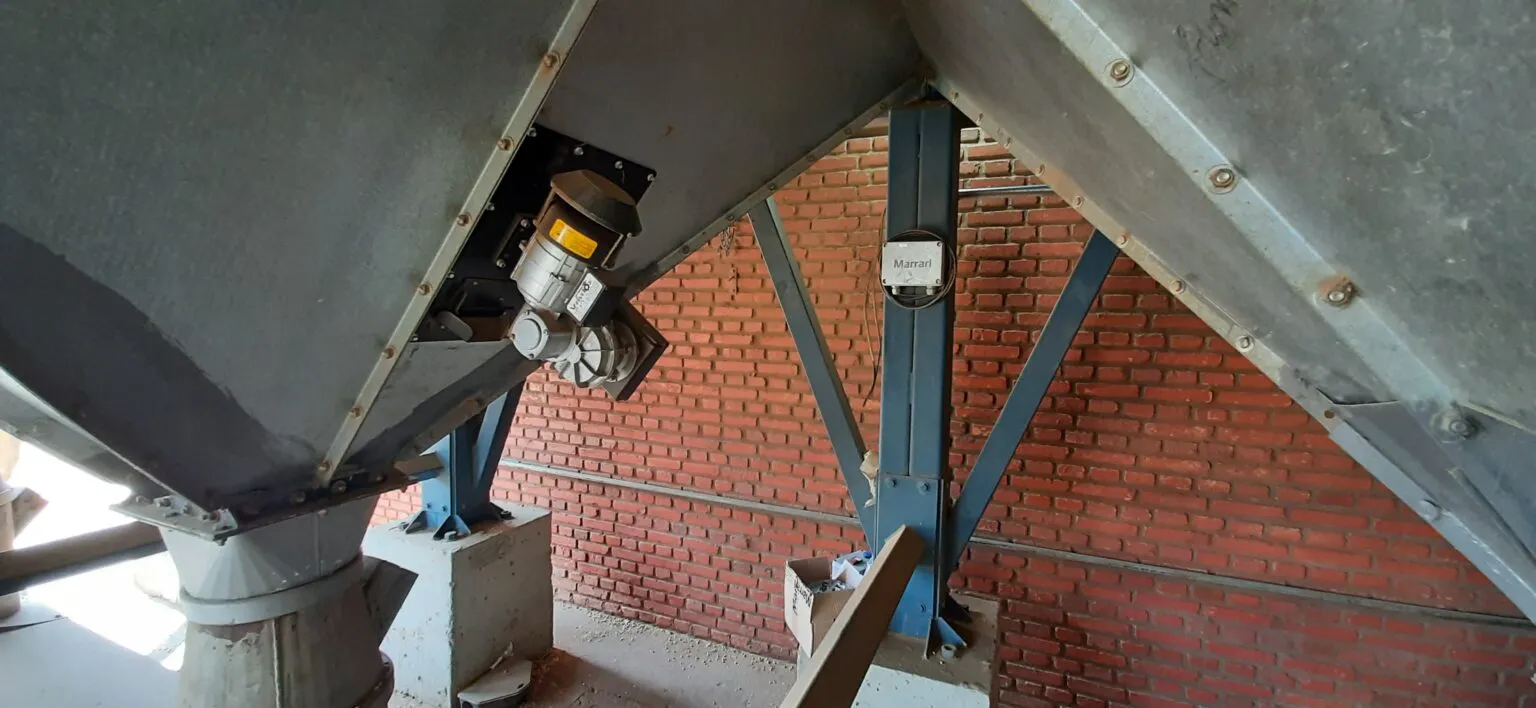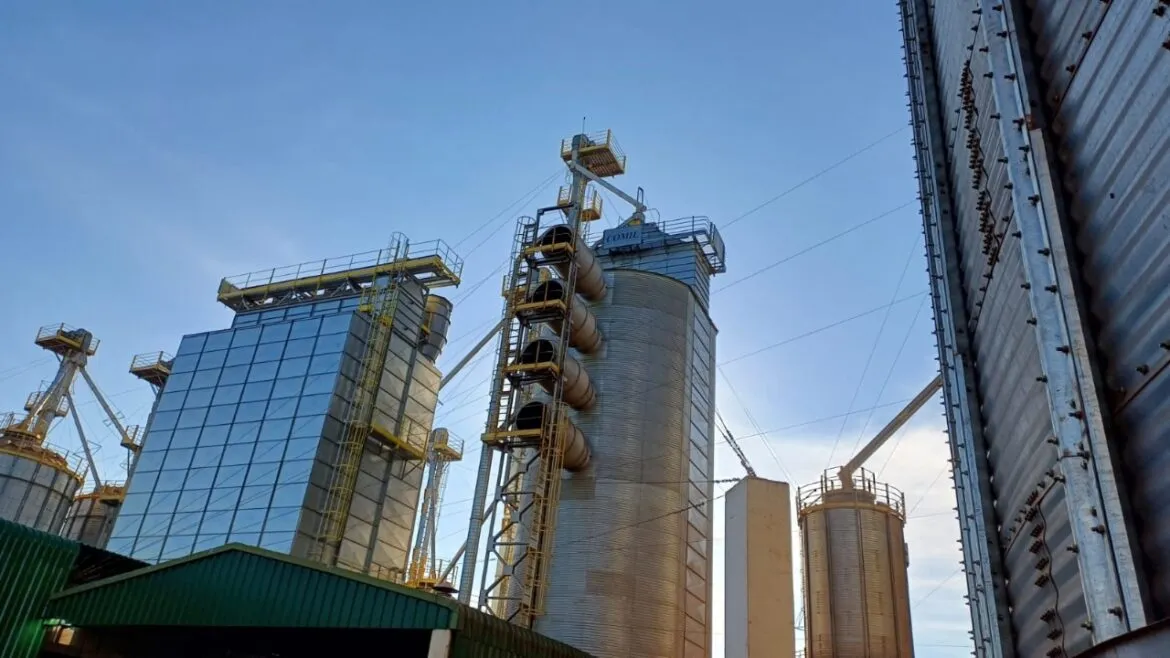
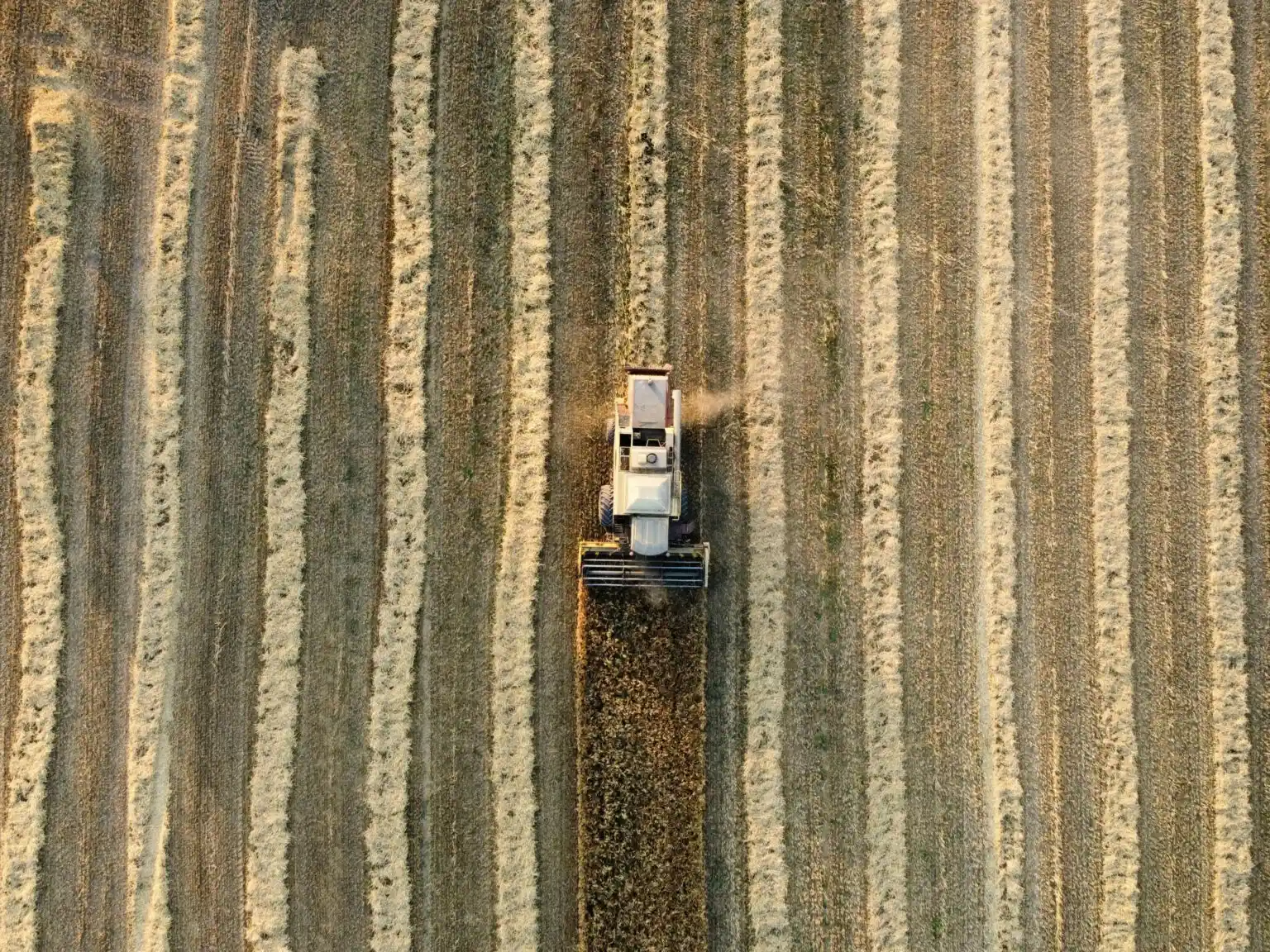

Have you ever asked yourself what the ideal grain moisture content is for soybeans, corn, sorghum and the other crops on your farm? It is one of the most important questions a grower can ask, and the answer has a direct impact on income, product quality and the profitability of the harvest. Brazil is one of the world’s largest grain producers and exporters: according to Conab, the national supply agency, production already exceeds 350 million tonnes per season (the 2025/26 estimate is about 360 million). All of that wealth goes through a critical step that many still underestimate: precise control of moisture content.
Grain moisture is not just a technical figure on a grading report. In practice, it is a financial gauge. Grain with moisture outside the ideal range can mean a direct price discount, a rejected load, mold growth, mass loss during drying and, in extreme cases, a disqualified shipment. On the other hand, grain that is too dry is also a loss: of weight, commercial flexibility and quality.
In this article we look at what grain moisture is, the ideal moisture content for the main commercial crops, the technologies available to measure it accurately (with a focus on UmiGrain, a Marrari Automação solution) and how much a lack of control can cost you.
What is grain moisture content?

The moisture content of a grain is the percentage of free water in its mass relative to the total weight of the sample. Put simply, it is the water the grain carries with it, which, commercially, you are selling along with the dry product.
All grains contain water. It exists as “free” water (which drying can remove) and “bound” water (part of the grain’s molecular structure). For trading and storage, free water is what matters, because it encourages microorganisms, insects and fungi and directly affects the weight being sold.
Under Brazilian law, moisture must be determined as part of grain grading (Normative Instructions of MAPA, the Ministry of Agriculture). Meters used in commercial transactions must be approved and verified by Inmetro, the National Institute of Metrology, Quality and Technology, under Inmetro Ordinance No. 47/2022.
“Moisture is the main factor governing the quality of stored product.” — Manoella Rodrigues da Silva, LocSolution (source: Agrolink, 2022)
Why is grain moisture control so critical?

When grain arrives at a warehouse or trading company above the moisture limit, the buyer knows it will have to remove that water, which costs energy, dryer capacity and labor. Those costs are passed on to the grower as a discount on the price paid.
But the risks of wrong moisture go beyond the immediate discount:
High moisture (above the ideal range):
- Encourages fungi such as Aspergillus flavus and Fusarium verticillioides, which produce dangerous mycotoxins like aflatoxins and fumonisins and rule out sales to the food and feed industries.
- Speeds up grain respiration, generating heat and consuming the product’s dry matter, which amounts to burning what you produced.
- Leads to
heat-damaged, moldy, fermented and sprouted kernels, which are graded as “damaged” and push the price down further. - For soybeans, research shows that storage at 14% moisture and 24°C is safe for no more than 63 days, and only 27 days if the temperature rises to 32°C. Each percentage point less moisture doubles safe storage time. (Source: Notícias Agrícolas, 2023)
Low moisture (below the ideal range):
- Makes grain brittle, increasing mechanical breakage during harvest, transport and processing.
- Reduces the total weight sold, and less weight means less revenue.
- Grain left to
over-dry in the field stays exposed longer to frost, wind, rain, birds and insects.
The ideal balance is therefore a narrow range, and knowing it for each crop is key to the operation’s financial success.
What is the ideal grain moisture content for each crop?
Below are the technical figures for the main commercial grains, based on Brazilian parameters from MAPA, Embrapa, SENAR and Conab. Knowing the ideal moisture for each species is the first step to protecting your crop and your income.
3.1 Ideal moisture content for soybeans

Soybeans are Brazil’s leading agribusiness product and the crop most sensitive to moisture changes in storage, largely because of their high oil content.
- Physiological maturity: the grain is at 45% to 50% moisture, but mechanical harvesting is only feasible once that drops significantly.
- Ideal harvest moisture: 13% to 15%, as recommended by Embrapa. In this range, mechanical damage is minimized.
- Moisture for sale: 12% to 14%, under MAPA standards.
- Moisture for
1-year storage: 11%, as recommended by MAPA. - Moisture for storage beyond 1 year: 9% to 10%.
(Sources: MAPA; Embrapa; SENAR, Collection 216 – Armazenamento de Grãos [Grain storage], 2018)
In practice: soybeans harvested at 16% to 18% moisture are common in rainy periods. In those cases, drying is essential before storage. Soybeans stored at 14% moisture for 180 days at 30°C can show up to five times more oil acidification than soybeans stored at 13%. (Source: Notícias Agrícolas, 2023)
3.2 Ideal moisture content for corn

Corn is Brazil’s
- Physiological maturity: occurs at about 50% moisture; the kernel has stopped accumulating nutrients, but mechanical harvesting is not yet feasible.
- Ideal harvest moisture (with a dryer available): 18% to 25%, to avoid losses from lodging and insect attack in the field.
- Ideal harvest moisture (no dryer): up to 14%, the safety limit for direct storage.
- Moisture for storage: 11% to 14% (ideal: 11% for 1 year).
- Moisture for sale: 14% standard (MAPA).
(Sources: Embrapa; SENAR, Collection 216; Aegro Blog, 2024)
According to Embrapa studies, mechanical damage during harvest is significantly lower when kernels are below 16% moisture. Above that, the kernel is “softer” and suffers more cracks and breakage during threshing.
3.3 Ideal moisture content for sorghum
Grain sorghum is gaining ground in Brazil, especially in the Cerrado region, as a
- Harvest moisture: sorghum reaches 23% to 26% moisture at harvest.
- Moisture after drying: 9% (the lowest of the grains listed).
- Moisture for safe
1-year storage: 11% to 12%. - Moisture for
5-year storage: 9% to 10%.
(Source: SENAR, Collection 216 – Armazenamento de Grãos [Grain storage], 2018)
Sorghum deserves special attention: because it is more susceptible than corn to mycotoxin-producing fungi, fast and efficient drying is even more critical to keep moisture in range and preserve quality.
3.4 Rice, wheat and beans: ideal moisture for each crop

Rice
- Harvest moisture: 17% to 21%.
- Moisture for safe storage: around 13% (Embrapa).
- Moisture for
long-term storage: 9% to 10%. - In the climate of Brazil’s
Center-West, paddy rice tends to reach hygroscopic equilibrium between 9.0% and 9.6% moisture. (Source: Embrapa Arroz e Feijão)
Wheat
- Ideal harvest moisture: 12% to 13%.
- Moisture for storage: below 13%.
- Wheat is very sensitive to moisture in storage; above 14% there is a
fast-rising risk of fermentation and mold.
Beans
- Harvest moisture: 14% to 18% (depending on the variety).
- Moisture for storage: 12% to 13%.
- Beans stored with high moisture harden quickly, which hurts cooking quality and market value.
Summary table: ideal grain moisture content by crop
| Grain | Harvest moisture | Commercial moisture (MAPA) | ||
|---|---|---|---|---|
| Soybeans | 13% – 18% | 12% – 14% | 11% | 9% – 10% |
| Corn | 14% – 25% | 12% – 14% | 11% | 9% – 10% |
| Sorghum | 23% – 26% | ~13% | 11% – 12% | 9% – 10% |
| Rice | 17% – 21% | 13% | 11% – 12% | 9% – 10% |
| Wheat | 12% – 13% | 13% | below 13% | — |
| Beans | 14% – 18% | 12% – 13% | 12% – 13% | — |
(Sources: MAPA, Embrapa, SENAR/CNA – Collection 216, 2018)
Financial impact: what happens when grain moisture is off target
So far we have treated ideal moisture as a quality factor. But a grower who delivers
4.1 How moisture discounts work
When grain arrives at the receiving facility above the 14% standard, the warehouse, cooperative or trading company discounts the price to cover drying costs. The general
W (%) = [(Mi – Mf) / (100 – Mf)] × 100
Where:
- W = weight loss (%)
- Mi = initial moisture (at receiving)
- Mf = target final moisture (for storage)
In practice, each percentage point of moisture above the standard costs about 1.15% of the product’s total weight, a figure found in Conab’s regulatory documents (Storage Subsystem 30.101, 2020).
On top of the mass loss, trading companies and cooperatives apply an extra correction factor for each excess point of moisture. According to CNA Brasil and growers in Mato Grosso, this discount ranges from 1.5% to 1.8% per percentage point above the standard. (Source: CNA Brasil; SEMADESC/MS)
4.2 Worked example: soybeans above the ideal moisture

Imagine a grower who delivers 100 tonnes of soybeans at 20% moisture when the warehouse standard is 14%.
- Excess moisture: 6 percentage points.
- Warehouse correction factor: 1.8% per point.
- Discount applied: 6 × 1.8% = 10.8% off the total value.
- At a hypothetical price of
R$ 150.00 (Brazilian reais) per60 kg bag (equivalent toR$ 2,500.00 per tonne):- Total financial loss:
R$ 2,500 ×100 t × 10.8% =R$ 27,000 on a single delivery.
- Total financial loss:
The physical mass loss (about 1.15% per point of moisture) adds even more:
- 6 points × 1.15% = 6.9% mass loss.
- On
100 t: 6.9 fewer tonnes paid for.
(Method based on: SEMADESC/MS; CNA Brasil; Conab – Storage System 30.101, 2020)
4.3 The flip side: when grain gets too dry
Growers also lose when grain moisture falls below the ideal range, because:
- Grain below 12% moisture is more brittle, producing broken pieces that lower the value of the lot.
- Each point of moisture too low means about 1.15% less weight sold: the grower “gave away” water they could have sold.
- With
over-drying, especially when it is not monitored, a plant handling 100 tonnes per hour that dries 1 point more than needed loses about 1 tonne of saleable product per hour: more than 24 tonnes over 24 hours of operation. (Source: Marrari Automação – UmiGrain)
How to measure grain moisture: available technologies
Precise moisture control requires the right equipment. Several types of meters are on the market, each with specific applications.
5.1 Portable meters: for the field
These are the meters growers use most in the field. They are
- Advantages: mobility, convenience and affordable cost.
- Limitations: spot readings (sampling), dependence on correct calibration and, in Brazil, not valid for commercial transactions without Inmetro approval.
5.2 Benchtop meters: for cooperatives and warehouses
- The most complete models combine a capacitance meter, digital scale and thermometer in one unit.
- In commercial transactions in Brazil, only models approved and verified by Inmetro (Ordinance No. 47/2022) may be used, which gives growers more accuracy and protection.
5.3 In-line meters: the frontier of industrial precision
The big technological shift of recent years is continuous,
UmiGrain: ideal grain moisture, controlled in real time

UmiGrain, developed by Marrari Automação, is a
How it works
UmiGrain uses the dielectric capacitive method: a sensor installed directly on the conveyor or dryer generates an electric field. As the grain passes over the sensor (in a layer up to
Unlike portable meters, which only check spot samples, UmiGrain reads the entire grain flow, giving a measurement that represents all of the material and making it possible to keep every lot at the ideal moisture.
Reading capacity
With 18,000 readings per hour, UmiGrain measures 360 times more often than a traditional manual check. Moisture swings in a lot are detected immediately, so dryer settings can be adjusted in real time.
Where to install UmiGrain in the plant
UmiGrain can be placed at several strategic points in the plant:
- Grain receiving: monitors each lot’s initial moisture on arrival, so drying intensity and time can be planned.
- Dryer outlet: confirms in real time that the grain has reached the target moisture before it goes to storage.
- Transfer line to storage: makes sure there are no unwanted changes during internal handling.
- Silo inlet: final check before
long-term storage. - Shipping point: confirms that delivered grain meets market or export requirements.
Practical and financial benefits
1. No more
2. No more moisture discounts. Grain delivered above the moisture standard is discounted directly at payment. With
3. Traceability and proof of quality. Readings are logged continuously and automatically, building a traceable record of the whole process. That reduces the need for frequent lab tests and provides documented proof of product quality.
4. Integration with plant systems. UmiGrain has analog and digital outputs for integration with PLCs, SCADA systems and other automation equipment, and can be operated remotely from a computer or mobile device.
5. Preventing mold and spoilage. By keeping moisture within the safe range throughout drying and storage, UmiGrain prevents the fungi and bacteria that spoil the product and can make it unsellable.
“Dozens of UmiGrain systems are already running in Brazil and Latin America, serving agribusiness companies that want efficiency, precision and full control over grain quality.” — Marrari Automação
Best practices for keeping grain at the ideal moisture

To control moisture effectively across the whole chain, these are the main technical recommendations:
In the field
- Take regular readings in the last 15 to 20 days before the planned harvest to track natural field drying.
- Don’t wait too long: grain that
over-dries in the field becomes brittle and exposed to the weather.
At harvest:
- Use calibrated portable meters to decide when to start mechanical harvesting.
- If unexpected rain comes, stop harvesting and
re-check moisture once the weather clears. - Adjust combine settings to grain moisture: wetter grain needs different settings to minimize mechanical damage.
At receiving and drying:
- Install continuous monitoring on the receiving conveyor (such as UmiGrain) to know each lot’s real moisture from the start.
- Set dryer temperature and airflow based on
real-time readings. - Monitor the dryer outlet to avoid both
under-drying andover-drying.
In storage:
- Keep aeration running to balance temperature and moisture within the grain mass.
- Take periodic readings throughout storage to spot hot spots or
high-moisture pockets. - Remember: storage does not improve grain quality. If it goes in bad, it comes out worse. Quality has to be secured before the grain enters the silo.
Regulation in Brazil: who guarantees moisture measurement in grain trading?
In Brazil, moisture measurement in commercial grain transactions is regulated by Inmetro. Every meter used for trade must be approved and periodically verified under Inmetro Ordinance No. 47/2022.
The rule protects both grower and buyer by ensuring readings are reliable and standardized.
“An instrument outside metrological standards can affect business, and even the country’s economy, given the large volume of transactions.” — Luiz Carlos Gomes, Director of Legal Metrology at Inmetro (source: SEMADESC/MS)
For growers, this means that when delivering their crop they have the right to require that the moisture meter meets Inmetro standards, and they can challenge readings taken with
Conclusion: knowing the ideal grain moisture protects your income

Controlling grain moisture is not just a technical or quality issue; it is a financial decision. Every percentage point outside the ideal range is money leaving the grower’s pocket, as a payment discount, lost weight, drying cost, spoilage risk or a downgraded product.
Agribusiness demands ever more precision. With tighter margins, volatile prices and global competition, growers who master moisture control along the whole chain, from field to silo and from silo to shipping, stay a step ahead.
Technologies like Marrari Automação’s UmiGrain represent exactly that shift: from occasional, subjective spot checks to continuous, automated and integrated monitoring. It is not just a
Knowing the ideal moisture for each crop, measuring it with the right technology and acting on that information in real time: that is the difference between a harvest that pays off and one that leaves money on the table.
Want to know more about UmiGrain and how it can transform quality management at your plant? Contact the Marrari Automação team to see how
References (in Portuguese)
- MAPA – Brazilian Ministry of Agriculture and Livestock. Normative Instruction No. 11/2007 and grain grading regulations. Available at: gov.br/agricultura
- SENAR / CNA Brasil – Grãos: armazenamento de milho, soja, feijão e café [Grains: storage of corn, soybeans, beans and coffee]. SENAR Collection, No. 216. Brasília: Senar, 2018. Available at: cnabrasil.org.br
- Embrapa Arroz e Feijão – Rice storage. Agência de Informação Tecnológica. Available at: embrapa.br
- Embrapa – Technical recommendations for soybean and corn harvest and
post-harvest. Various technical publications. - Conab – Sistema de Operações: Subsistema de Armazenagem 30.101 (Jan. 2020). Available at: conab.gov.br
- Inmetro – Ordinance No. 47/2022. Technical metrological regulation for grain moisture meters. Available at: inmetro.gov.br
- SEMADESC/MS – 5 fatos para entender tudo sobre os medidores de umidade de grãos [5 facts to understand everything about grain moisture meters]. Available at: semadesc.ms.gov.br
- CNA Brasil – Soja: com excesso de chuvas, descontos por umidade devem ser maiores nesta safra [Soybeans: with excess rain, moisture discounts are likely to be higher this harvest]. Available at: cnabrasil.org.br
- Notícias Agrícolas – Grau de umidade soja: adequação e suas implicações na conservação, logística e competitividade [Soybean moisture content: compliance and its implications for storage, logistics and competitiveness]. Dec. 2023. Available at: noticiasagricolas.com.br
- Aegro Blog – Umidade do milho para colheita: o guia completo para evitar perdas [Corn moisture for harvest: the complete guide to avoid losses]. Available at: aegro.com.br
- Syngenta Mais Agro – Umidade do milho: impacto na qualidade e lucro [Corn moisture: impact on quality and profit]. 2025. Available at: maisagro.syngenta.com.br
- Marrari Automação – UmiGrain:
real-time grain and seed moisture meter (in English). Available at: marrari.com.br - Brazilian Chamber of Deputies / Aprosoja – Technical presentation on soybean moisture content and its commercial impact. CAPADR, 2023.
Did you like this article?
Could this article help someone on your team? Send the link to a colleague: